Introduction
Aruba is affectionately known as “One Happy Island”, and it doesn’t take long to see why. With year‑round sunshine, crystal‑clear waters and some of the friendliest people in the Caribbean, this tiny island just 21 miles long and 6 miles wide packs a surprisingly diverse punch. Part of the ABC islands (along with Bonaire and Curaçao) and a constituent country within the Kingdom of the Netherlands, Aruba lies off the coast of Venezuela and sits outside the hurricane belt, granting it consistently sunny days and steady trade winds. Though desert‑like in parts, the island offers lush pockets of greenery, vibrant street art and a cultural mix influenced by Dutch, Caribbean, African and South American traditions. Whether you’re planning your first visit or returning for another dose of Aruba’s magic, this guide highlights the top places to explore, insider tips and fascinating facts to help you make the most of your vacation.
Click here to book your trip today
Get your swimwear and apparel for your trip from foreplay boutique today.
Overview of Aruba
Location & Size. Aruba is located in the southern Caribbean Sea about 15 miles north of Venezuela. It measures roughly 21 miles (33 km) long and 6 miles at its widest point, with a total area of about 75 square miles (193 km²). Approximately 100,000 people call Aruba home.
Climate & Seasons. The island enjoys an average temperature of 82 °F (28 °C) year‑round and benefits from constant trade winds that provide relief from the tropical heat. Aruba’s rainy period occurs between October and January, but rainfall is generally brief and the island’s location below the hurricane belt means storms rarely disrupt travel. High season runs from mid‑December to mid‑April when prices and crowds peak, while low season spans mid‑April through mid‑December. Off‑season deals and quieter beaches make shoulder months attractive for budget‑minded travelers.
Language & Culture. Aruba’s official languages are Dutch and Papiamento—an Afro‑Portuguese Creole with Spanish and Dutch influences—but most locals speak English and Spanish fluently. A warm “Bon bini” (welcome) and “Danki” (thank you) in Papiamento will always earn smiles. The island’s population is famously diverse, reflecting centuries of Indigenous Arawak heritage, European colonization and Caribbean influences. Street art murals in San Nicolas celebrate this multicultural identity.
Safety & Health. Aruba is considered one of the safest destinations in the Caribbean. Crime rates are low but visitors should follow common‑sense precautions such as not leaving valuables unattended on the beach or in rental cars. Tap water comes from a state‑of‑the‑art desalination plant and meets World Health Organization standards, so you can drink it straight from the tap. The island uses 110 V electricity like the United States, and there’s a well‑equipped hospital near Eagle Beach for medical emergencies.
Currency & Costs. Aruba’s currency is the Aruban florin (AWG), but U.S. dollars are widely accepted at a fixed exchange rate of approximately AWG 1.75–1.80 per USD. Credit cards are accepted at most resorts and restaurants, though cash is handy for small vendors and bus fares. Tipping is discretionary; some restaurants add a 10–15 % service charge. Taxi fares are fixed and quoted in florins; confirm the price before starting your ride.
Click here to book your trip today
Top Places to Visit in Aruba
Eagle Beach
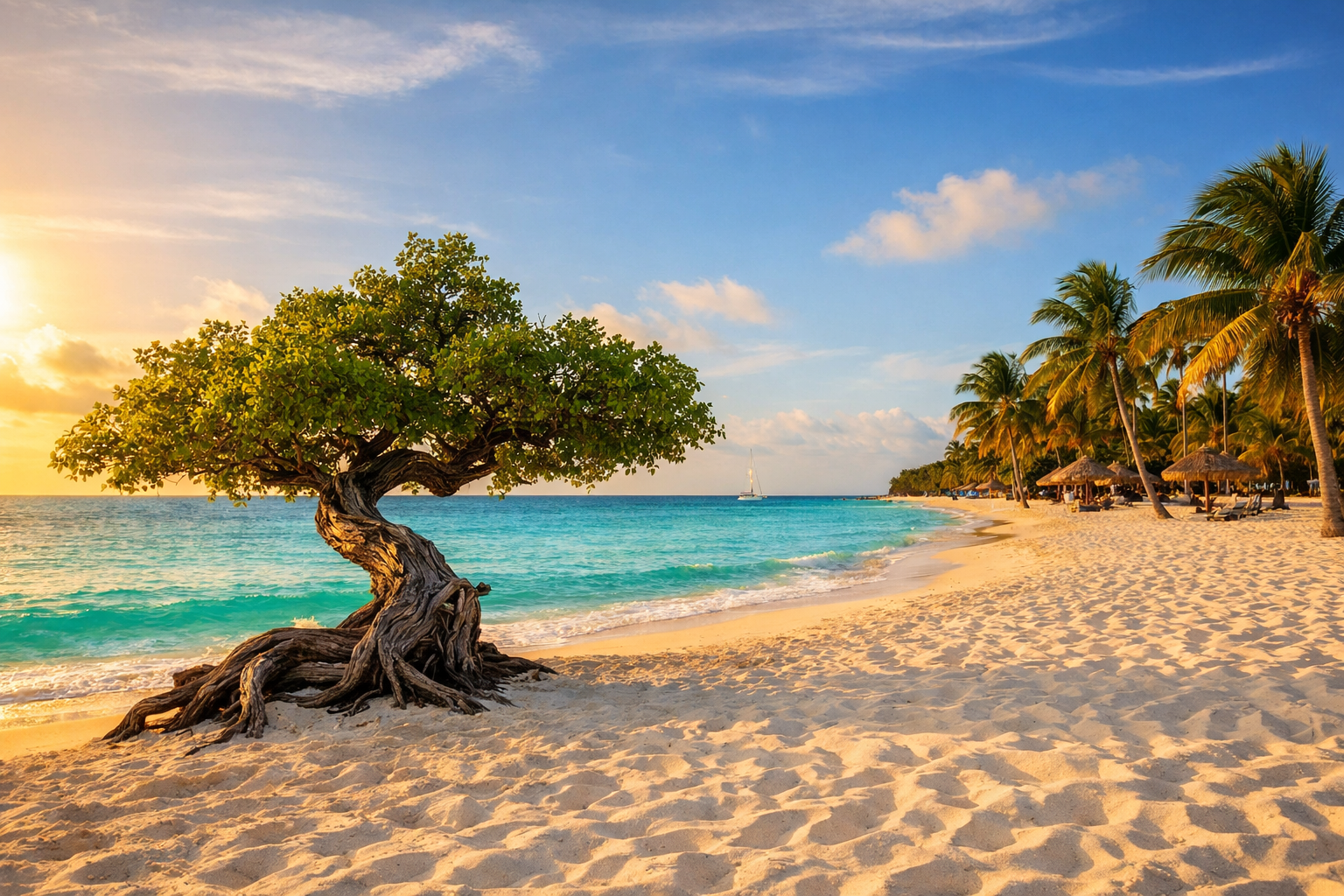
Often ranked among the world’s best beaches, Eagle Beach dazzles with powdery white sand and crystal‑clear turquoise waters. It’s famous for the photogenic Fofoti trees that lean dramatically toward the sea, creating an iconic island silhouette. Eagle Beach is wide and serene, making it ideal for swimming, sunbathing and spotting nesting sea turtles (especially from March to September). No high‑rise buildings mar the view, and public access means everyone can enjoy this paradise.
Palm Beach & Mangel Halto
Just north of Eagle Beach, Palm Beach is lined with high‑rise resorts, beach bars and water‑sports outfitters. You can jet ski, parasail or kayak by day and enjoy lively nightlife after sunset. For a more tranquil vibe, head to Mangel Halto, a mangrove‑fringed bay perfect for snorkeling and paddleboarding. Its calm, shallow waters teem with tropical fish and turtles, and the quiet surroundings make it a romantic spot to watch sunset.
Natural Pool (Conchi) & Arikok National Park
Covering roughly 20 % of Aruba, Arikok National Park protects desert landscapes dotted with cacti, divi‑divi trees and rugged hills. Highlights include Quadirikiri and Fontein caves, which feature skylights and ancient Arawak petroglyphs. The most celebrated attraction, however, is the Natural Pool (Conchi). Surrounded by volcanic rock, this hidden pool offers a peaceful swimming spot protected from rough seas. The pool is accessible via 4×4 vehicle or a strenuous hike, and visitors should heed park rangers’ advice on swimming conditions.
California Lighthouse
Standing over 90 feet high at Aruba’s northwestern tip, the California Lighthouse was built between 1914 and 1916 and named after the steamship California, which sank nearby in 1891. Its barren, almost lunar‑like surroundings contrast with sweeping views of sand dunes, the rugged north coast and the high‑rise hotel area. Visitors can climb the spiral staircase for panoramic vistas and learn about maritime history at the adjacent museum. Sunset is particularly stunning here.
Alto Vista Chapel
Perched on a hill above Aruba’s north shore, the Alto Vista Chapel is a humble Catholic church built in 1750 by Venezuelan missionary Domingo Antonio Silvestre. Its simple white façade and red‑tiled roof exude serenity, and the chapel’s hilltop location provides breathtaking views of the Caribbean Sea. Visitors approach via a winding road lined with crosses representing the Stations of the Cross, adding spiritual significance. Inside, polished pews, fresh flowers and religious art create a peaceful retreat. The site also serves as a starting point for scenic walking and mountain‑bike trails through Aruba’s cactus‑studded north coast.
Antilla Shipwreck
For scuba divers and snorkelers, the Antilla Shipwreck is a must. This German freighter, confiscated by the Dutch at the start of World War II, was scuttled by its crew in 1940 and now rests on its side off Aruba’s northwest coast. At over 400 feet long, it is the largest wreck in the southern Caribbean and teems with marine life such as barracudas, groupers, moray eels and colorful parrotfish. Dive operators offer day and night excursions suitable for all levels. The wreck not only provides underwater adventure but also tells a fascinating story of Aruba’s wartime history.
Oranjestad & Fort Zoutman
Aruba’s colorful capital Oranjestad blends Dutch colonial architecture with modern shops, restaurants and museums. Hop aboard the free Downtown Streetcar, which loops through the city and passes landmarks like Fort Zoutman, the island’s oldest building dating to 1796, and the Archaeological Museum. In the evening, wander down the harbourfront or explore the street art in San Nicolas.
Click here to book your trip today
Things to Do / Highlights
Water sports & Beach Fun. Swim or snorkel in the calm waters of Eagle Beach, kayak and jet ski off Palm Beach, or tackle wind‑ and kite‑surfing at Fisherman’s Huts near the California Lighthouse. Dive or snorkel at the Antilla Shipwreck and other wrecks like the Pedernales (bring your dive certification). Charter a catamaran to explore secluded coves, or take a ferry to De Palm Island where flamingos roam and water slides await.
Land Adventures. Rent a 4×4 or join an off‑road tour of Arikok National Park to explore cactus‑studded landscapes and caves. Hike or mountain‑bike the trails around Alto Vista Chapel. Climb the Casibari and Ayo rock formations for panoramic island views. In San Nicolas, street art tours showcase murals celebrating Aruban heritage.
Cultural & Culinary Experiences. Visit the Aruba Aloe Factory & Museum to learn about the island’s aloe industry. At Charlie’s Bar in San Nicolas, dine on fresh seafood and local creole dishes in a quirky, memorabilia‑filled setting. Sample local cuisine influenced by African, Dutch, Portuguese and South American flavors: enjoy pisca hasa (fried fish in creole spices), savory pastechi (empanada‑like snacks), hearty stoba stews and spicy pica di papaya hot sauce. Don’t miss the Gros Islet–style fish fry at De Palm Island or the island’s only vineyard, Alto Vista Winery, for desert‑grown wines.
Events & Nightlife. Aruba hosts vibrant festivals such as the Aruba Carnival (January–February) with parades and colorful costumes, the Soul Beach Music Festival (May) and summer’s Bon Bini Festival celebrating local culture. Palm Beach and Oranjestad come alive at night with casinos, live music venues and beach bars.
Travel Tips
Best Time to Visit
Because Aruba sits below the hurricane belt, it’s safe to visit year‑round. High season (December 15–April 14) coincides with North American winter and brings higher prices and larger crowds. Low season (mid‑April to mid‑December) offers quieter beaches and better deals; just be prepared for occasional short rain showers, especially from October to January.
What to Pack & Prepare
- Reef‑safe sunscreen: Aruba banned sunscreens containing oxybenzone in 2020 to protect its marine life. Pack a high‑SPF, reef‑safe sunscreen and a wide‑brimmed hat—the island’s white sands reflect the sun.
- Swimwear & activewear: Bring multiple swimsuits, quick‑dry clothing and water shoes for rocky areas. Pack hiking shoes for exploring Arikok’s trails and rock formations.
- Reusable water bottle: Tap water is safe and delicious thanks to Aruba’s desalination plant, so refill your bottle instead of buying plastic.
- Cash & cards: US dollars and credit cards are widely accepted. Keep small bills for tips and bus fares; taxi rates are fixed. Remember that service charges may already be added to restaurant bills.
- Travel documents: U.S., Canadian and EU citizens do not need a visa for stays under 30 days, but your passport must be valid for at least six months. Bring a copy of your driver’s license if renting a car.
- Diving certification: To explore Aruba’s wrecks like the Antilla, pack your scuba diving license and logbook.
Getting Around
Direct flights connect Aruba’s Queen Beatrix International Airport to cities in the U.S., Canada, South America and Europe. On island, you can:
- Rent a car or jeep: Ideal for exploring Arikok National Park and less developed areas. Drive on the right side of the road. Gas stations accept cash and credit.
- Use taxis: Licensed taxis have fixed fares posted in florins. Taxis do not use meters; confirm the fare before departing.
- Hop on public buses: The Arubus system connects major resorts, beaches and towns. Buses run regularly but may be less frequent in the evening.
- Ride the free streetcar: In Oranjestad, a double‑decker trolley circles downtown, stopping at attractions like Fort Zoutman and the Archaeological Museum.
- Join tours: For activities like snorkeling, ATV excursions or sailing, book tours in advance during peak season.
Safety & Etiquette
- Stay aware: Aruba is very safe, but use the same caution you would at home. Don’t leave belongings unattended on beaches or in cars, and lock hotel rooms.
- Respect nature: Observe signs and advisories at the Natural Pool and beaches. Do not touch coral or disturb marine life when snorkeling or diving.
- Dress appropriately: Swimwear is fine at the beach but cover up in towns and religious sites. At Alto Vista Chapel, shoulders and knees should be covered.
- Learn local phrases: Simple Papiamento expressions like Bon bini (welcome) and Danki (thank you) show respect for the local culture.
Food & Drink
Aruba’s cuisine reflects its multicultural heritage. Seafood dishes such as snapper, mahi‑mahi and conch soup dominate menus. Try pisca hasa (fried fish with creole spices), pastechi pastries, arroz moro (rice and kidney beans) and hearty stoba stews. For a spicy kick, add pica di papaya, a hot sauce made from Madame Jeanette peppers and papaya. Wash it down with Aruba’s Balashi or Chill beer, or sample local rum cocktails. Since 2020, reef‑safe sunscreen rules apply to cosmetics and toiletries, so check ingredients on lotions.
Interesting Facts about Aruba
- Multilingual population: Many Arubans speak four languages—Papiamento, Dutch, Spanish and English. This linguistic diversity stems from the island’s colonial past and its role as a trading hub.
- Outside the hurricane belt: Aruba’s location below the main hurricane zone means storms rarely interrupt vacations.
- Desert landscape & trade winds: Although known for beaches, Aruba’s interior is arid, dotted with cacti and divi‑divi trees, and cooled by constant trade winds.
- Safe tap water: Thanks to a desalination plant, Aruba produces high‑quality drinking water.
- Unique flora: The island’s iconic divi‑divi and fofoti trees grow bent toward the southwest due to prevailing trade winds; they double as natural compasses.
- Rich maritime history: The Antilla shipwreck tells a World War II tale and is one of the largest diveable wrecks in the Caribbean.
- Spiritual & historical sites: From the 1750 Alto Vista Chapel to 18th‑century Fort Zoutman, Aruba preserves its heritage alongside modern resorts.
- Eco‑conscious measures: Aruba bans reef‑damaging sunscreens and promotes sustainable tourism through protected areas like Arikok National Park.
- Free streetcar: Oranjestad’s complimentary streetcar offers tourists an easy way to explore downtown.
- One Happy Island: Aruba’s official tourism slogan reflects the islanders’ optimistic spirit and has become a way of life.
Conclusion
Aruba might be small, but its allure is boundless. From the pristine sands of Eagle Beach to the windswept heights of the California Lighthouse, the island invites you to embrace adventure and relaxation in equal measure. Dive into history at the Antilla Shipwreck, hike through the desert landscapes of Arikok National Park, and find serenity at the Alto Vista Chapel. Enjoy multilingual conversations, savor spicy creole dishes and feel the trade winds that have shaped everything from Aruba’s trees to its culture. Armed with these travel tips—packing reef‑safe sunscreen, visiting in the shoulder season, renting a car for off‑road exploration and learning a few words of Papiamento—you’ll be prepared to experience Aruba’s warmth and wonder. Like countless visitors before you, you may leave echoing the island’s simple but profound motto: “One Happy Island.”
Click here to book your trip today
Get your swimwear and apparel for your trip from foreplay boutique today.