Introduction
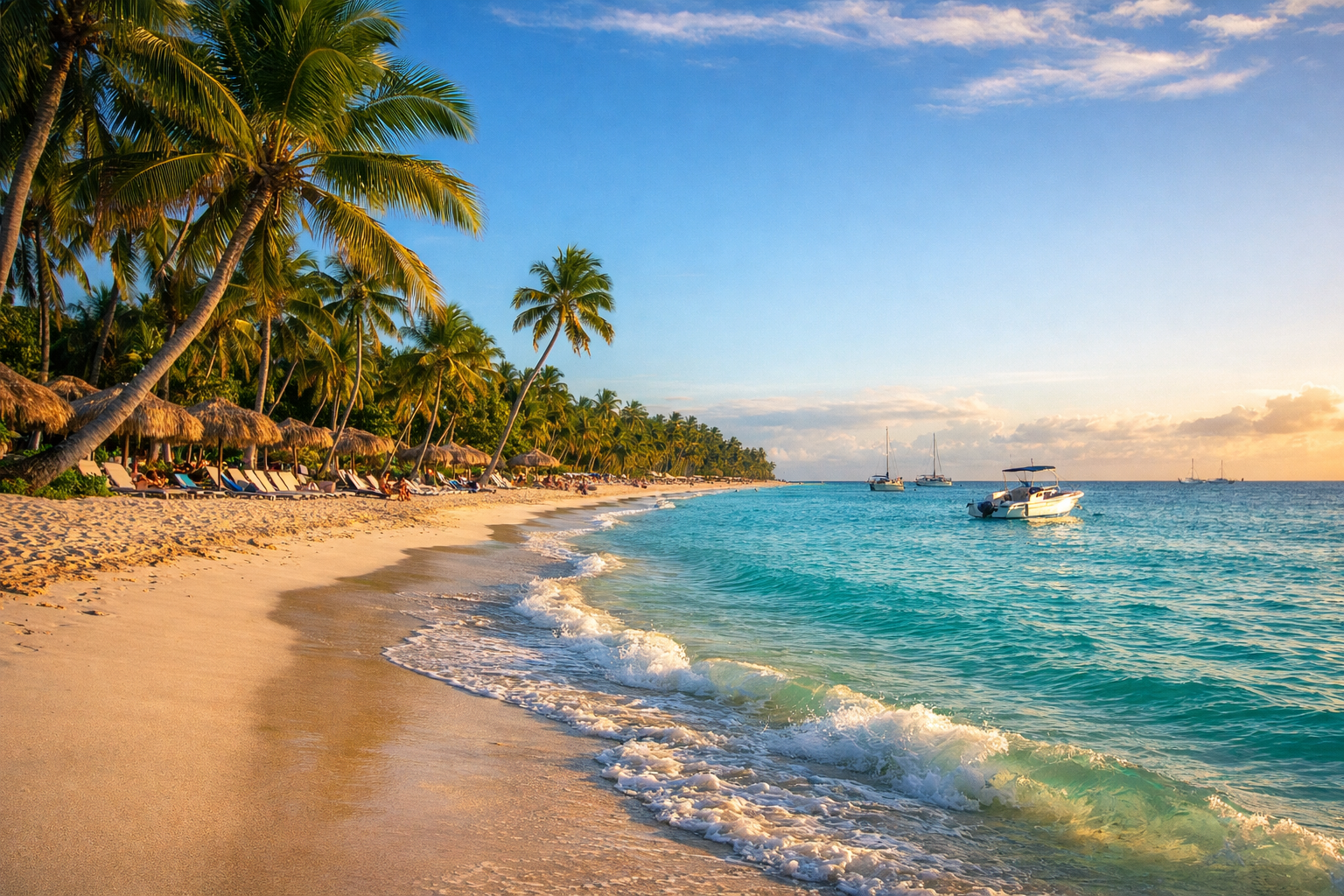
The Dominican Republic (DR) is an island nation where Caribbean dreams meet vibrant culture. The country occupies the eastern two‑thirds of the island of Hispaniola (shared with Haiti) and offers miles of palm‑lined beaches, colonial cities steeped in history, lush rainforests and towering mountains. You might come for the powder‑soft sands of Punta Cana or the rhythms of merengue and bachata, but you’ll stay for the welcoming people, rich cuisine and diverse landscapes. This guide covers the top places to visit, essential travel tips and fascinating facts to help you plan your perfect DR getaway.
Click here to book your trip today
Get your swimwear and apparel for your trip from foreplay boutique today.
Best Time to Visit the Dominican Republic
Thanks to its Caribbean location, the Dominican Republic experiences warm temperatures year‑round, but certain seasons are more comfortable than others. Late November through February is considered the most pleasant time to visit: mornings and evenings are breezy, rain showers are rare and daytime temperatures hover in the low to mid 80°F (about 26–29°C). This coincides with winter in North America and Europe, so expect high season pricing.
From December to early March, the official tourism board notes that daytime temperatures range from 25°C to 27°C (77–80°F) with cool breezes, while mountain towns can start at 10°C (50°F). Summer (April to October) brings warmer, more humid conditions, with peaks near 32°C (90°F); it’s also the rainy and hurricane season (June 1 to November 30), though the probability of a major hurricane is slim. Low season deals make this a good time for budget travelers. When planning, remember that the DR’s weather can vary by region—coastal areas stay warm while mountain towns like Jarabacoa are cooler.
Top Places to Visit in the Dominican Republic
The DR’s diversity means there’s something for every traveler—from all‑inclusive resorts to off‑the‑beaten‑path adventures.
Punta Cana
Punta Cana is synonymous with the Dominican Republic. This resort capital boasts an avalanche of all‑inclusive hotels and a 97‑kilometer coastline facing both the Atlantic Ocean and the Caribbean Sea. Beyond the resorts, the beaches here rival any in the Caribbean and invite you to hop on a catamaran, go deep‑sea fishing or simply lounge under a palm tree while the turquoise waves lap the shore. Nightlife hums with casinos and clubs.
Things to do: Relax on Bavaro Beach, book a sunset catamaran cruise, try windsurfing or parasailing, and enjoy nightlife at Coco Bongo or a local merengue club. Nearby attractions include Scape Park’s caves and zip lines, and day trips to Saona Island.
Santo Domingo
The DR’s capital, Santo Domingo, is one of the Caribbean’s oldest cities. In Zona Colonial, you’ll find the region’s oldest cathedral, fortress, monastery and university, dating back to the 16th century. Beyond the cobblestone streets of the colonial zone, modern Santo Domingo offers elegant restaurants, edgy nightclubs and cultural institutions.
Things to do: Tour Catedral Primada de América (the first cathedral in the New World), stroll through Parque Colón, visit Alcázar de Colón (the former home of Christopher Columbus’ son), explore Fortaleza Ozama and wander Calle El Conde’s shops and cafés. For a unique dinner, reserve a table at El Mesón de la Cava, a restaurant set inside a Taíno cave.
Samaná Peninsula
If you’re seeking natural beauty and ecotourism, head north to the Samaná Peninsula, where friendly small‑town vibes meet lush landscapes. From January through March, thousands of humpback whales migrate to Samaná Bay to give birth, making it one of the world’s premier whale‑watching destinations. Samaná also provides easy access to Parque Nacional Los Haitises, a 1600 sq km rainforest dotted with karst islets, caves featuring Taíno pictographs and tangled mangroves.
Things to do: Join a whale‑watching tour (peak season: January–March), kayak through mangroves in Los Haitises National Park, hike to Salto El Limón waterfall (see below), and relax in small beach towns like Las Terrenas and Las Galeras.
Sosúa & Cabarete
On the north coast, Sosúa offers a tale of two towns. By day it’s a sleepy beach haven where you can enjoy the Atlantic’s cerulean waves and sample cheese and dairy products—Sosúa became the island’s dairy capital after hundreds of Jewish refugees established farms there in the late 1930s. At night the main strip transforms into a lively party scene with bars, lounges and nightclubs; visitors should exercise caution as the area is known for sex tourism.
Just east, Cabarete is a water‑sports mecca. Its beaches have perfect winds and waves for kayaking, snorkeling, windsurfing and kite surfing; multiple international competitions take place here.
Things to do: In Sosúa, sunbathe at Playa Sosúa and visit the Jewish Museum; by night, dance to live music at Blue Ice Piano Bar or Jolly Roger. In Cabarete, take kite‑surfing lessons, rent a paddleboard, or enjoy a rum punch at a beach bar while watching the kites cut across the sky.
Salto El Limón
Deep in the Samaná interior, the 2.4 km trail to Cascada El Limón rewards adventure seekers. The path is wet and rocky, and visitors often traverse it on horseback, though you can hike it on foot by crossing rivers and hopping over muddy rocks. After a 30–60 minute trek from the small town of El Limón, you’ll reach a 46 m (150 ft) waterfall that plunges into a cool swimming hole.
Things to do: Book a guided horseback excursion from Las Terrenas (the tour usually includes a guide, horse and lunch), swim beneath the falls and bring rubber footwear for the journey.
Bayahibe & Isla Saona
On the Caribbean coast, Bayahibe is a former fishing village turned quiet resort town known for scuba diving. Nearby beaches like Playa Dominicus and Playa Bayahibe provide launching points for boat trips to Isla Saona—part of Parque Nacional del Este—which hosts postcard‑perfect sandbars and turquoise lagoons. The area features around 20 dive sites, making it one of the country’s most active scuba destinations.
Things to do: Dive or snorkel among coral reefs and shipwrecks, relax on Playa Bayahibe, take a catamaran tour to Saona Island and sample fresh seafood at local restaurants.
Jarabacoa
Nicknamed the “City of Everlasting Spring,” Jarabacoa sits in the heart of the Cordillera Central mountains. Here you’ll find cooler temperatures, verdant hikes, white‑water rafting on the Yaque del Norte River and warm mugs of Dominican coffee. The area is also known for rope‑bridge crossings over rivers, plentiful golf and a Cistercian monastery. Jarabacoa hosts one of the DR’s famous Carnaval celebrations each February.
Things to do: Raft the Class III rapids, hike to Salto de Jimenoa waterfalls, cross rope bridges over the Jimenoa River, explore Reserva Científica Ebano Verde (home to over 600 species of flora and fauna), golf at Jarabacoa Golf Club and attend Carnaval.
Pico Duarte & Cordillera Central
For hikers looking to conquer the Caribbean’s highest peak, Pico Duarte stands at 3,101 m (10,174 ft) above sea level, making it the tallest point in both the Dominican Republic and the entire Caribbean. It rises as part of the Cordillera Central range and is only about 85 km (53 mi) northeast of Lake Enriquillo, one of the region’s lowest points. Multi‑day guided treks depart from Jarabacoa or Constanza and typically include meals and mules to carry gear.
Click here to book your trip today
Travel Tips for Visiting the Dominican Republic
Currency & Money
The DR’s currency is the Dominican peso (RD$). As a general guideline, RD$100 is roughly US$2, RD$500 is about US$10 and RD$1,000 equals approximately US$20. U.S. dollars and euros are widely exchanged at banks or authorized currency exchange offices. ATMs (cajeros) from banks like Banco Popular, Scotiabank and Banco BHD León are widely available and provide the best exchange rates; use indoor ATMs during the day for safety. Most resorts and larger businesses accept credit cards.
Language & Communication
Spanish is the official language, and Dominicans are known for speaking quickly and using unique slang. If you don’t speak Spanish, don’t worry—English is widely spoken in tourist areas. Learning a few phrases in Spanish will earn you smiles. In resort towns and hotels, staff often speak multiple languages including French, Italian, German and Russian.
Getting Around
Public transportation is extensive: large coach buses connect major cities, while smaller guaguas (van buses) handle shorter routes between towns. Shared taxis (“carritos”) and motorbike taxis are common for local trips, and major car rental companies operate in cities and at airports. When using taxis or carritos, agree on fares before starting and carry small bills. Fridays are school field trip days, so museums and historic sites can be crowded; beaches and rivers are busy on Sundays.
Health & Safety
- Stay hydrated and sun‑safe: The Caribbean sun is strong year‑round. Use high‑SPF sunscreen, wear a hat and sunglasses and drink plenty of water. Tap water is not safe to drink; always purchase bottled water. Hotels usually provide bottled water and colmados (corner stores) sell it cheaply.
- Food & drink: Savor Dominican dishes like mangú (mashed plantains), sancocho (hearty stew) and la bandera Dominicana (rice, beans and meat). Desserts are often coconut‑based, and batidas (fruit smoothies blended with milk) like morir soñando (orange juice with condensed milk) are a must. Try local rums such as Brugal and Barceló.
- Tipping: Restaurant bills include a 10% service charge, but adding another 10% is customary to ensure servers receive a tip. Taxi drivers don’t expect tips, though it’s appreciated for excellent service.
- Electricity: The DR uses 110‑volt outlets like the U.S. and Canada, so visitors from these countries don’t need adapters. Travelers from Europe will need adapters and possibly voltage converters. Power fluctuations are common outside of resort areas; use surge protectors.
- Safety: The DR is generally safe for tourists, but exercise common sense. Avoid isolated areas at night, secure valuables in hotel safes and keep only small amounts of cash on you. In Sosúa, be aware of sex tourism and persistent touts. Always agree on prices before accepting goods or services and register with your country’s travel advisory programs.
Packing & Preparation
Pack layered clothing to match the DR’s varied climates. Bring swimwear and cotton long sleeves for sun protection, plus shorts and lightweight dresses for the beach. In Santo Domingo and historic sites, avoid wearing shorts—Dominicans dress smartly when out in the city. Dress up for evenings and pack long sleeves, a sweater and pants if visiting cooler mountain towns like Jarabacoa and Constanza.
Beyond clothing, bring any prescription medications, high‑SPF sunscreen (limited brands may be available), a hat, sunglasses and mosquito repellent. Carry a reusable water bottle you can refill from purchased water. A lightweight backpack is handy for day trips, and water shoes are useful for waterfall hikes and canyoning. For reading or downtime, pack a book or download e‑books.
Get your swimwear and apparel for your trip from foreplay boutique today.
Interesting Facts about the Dominican Republic
- Highest Peak and Lowest Point: Pico Duarte stands 3,101 m (10,174 ft) tall and is the highest peak in the Dominican Republic and all of the Caribbean. Remarkably, it rises only about 85 km northeast of Lake Enriquillo, which is 46 m below sea level.
- Old Meets New: Santo Domingo’s colonial zone houses the oldest cathedral and fortress in the Americas, while its modern districts buzz with contemporary art galleries, cafés and nightlife.
- Whale Nursery: Samaná Bay welcomes thousands of humpback whales each winter (January–March), making it one of the world’s best places to witness these giants up close.
- Jewish Heritage: The town of Sosúa became a haven for Jewish refugees in 1938; about 800 people accepted the Dominican government’s invitation and established a dairy and cheese factory, shaping the town’s character today.
- Carnival Celebrations: Jarabacoa hosts one of the country’s most colorful Carnaval festivities in February, featuring parades, music and mask traditions.
Conclusion
From the all‑inclusive resorts of Punta Cana to the colonial charms of Santo Domingo, the whale‑filled waters of Samaná to the cloud‑forest peaks of Jarabacoa, the Dominican Republic is a mosaic of unforgettable experiences. Knowing when to visit, where to go and how to prepare allows you to fully embrace its diversity—whether you’re diving off Bayahibe, hiking to Cascada El Limón, dancing bachata in a Santo Domingo club or sipping coffee high in the Cordillera Central. The DR’s warm climate, friendly people and rich cultural heritage make it one of the Caribbean’s most captivating destinations.
Click here to book your trip today
Get your swimwear and apparel for your trip from foreplay boutique today.