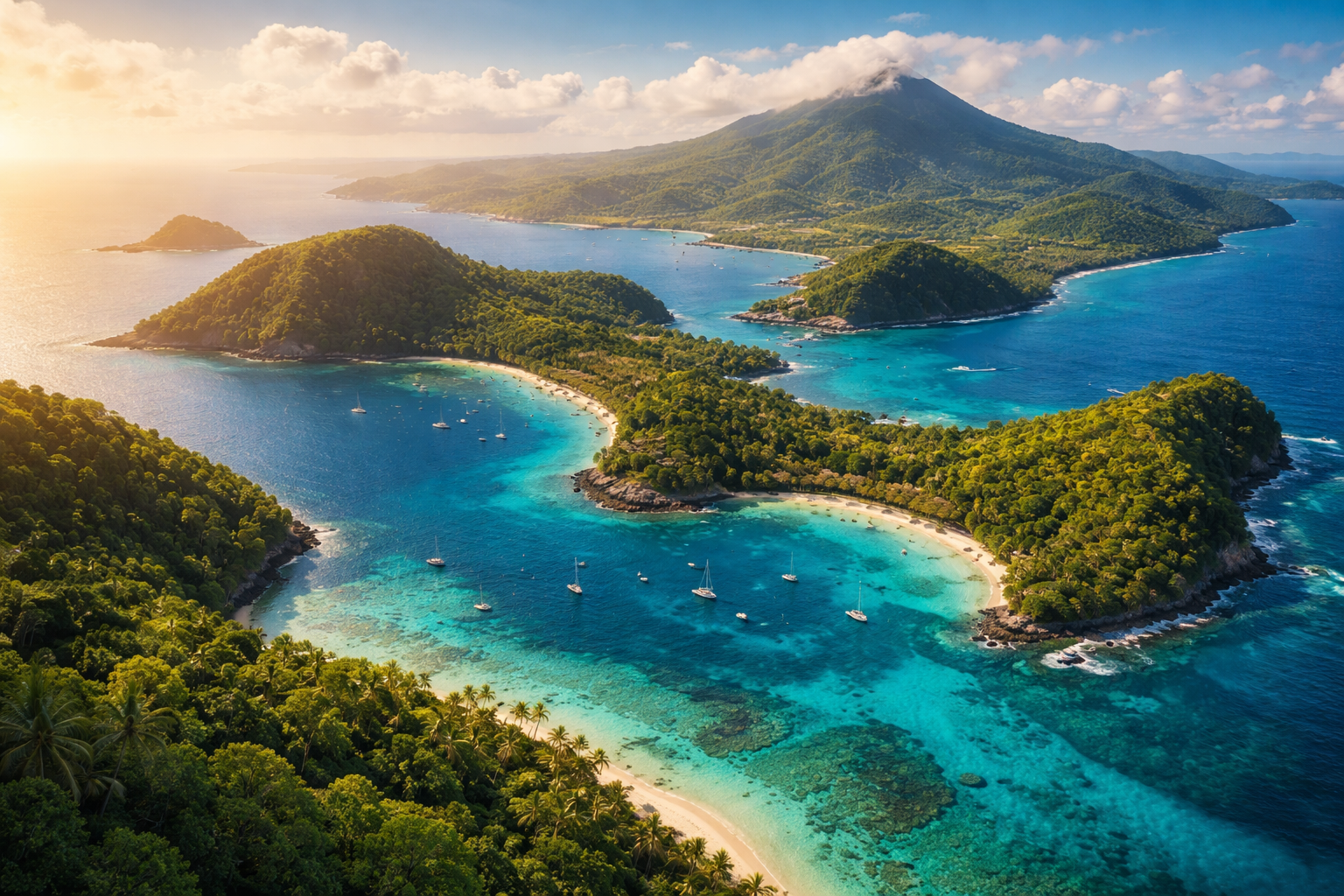
Guadeloupe is an archipelago of five main islands at the heart of the Lesser Antilles. Viewed from above, Grande‑Terre and Basse‑Terre form a butterfly, while the smaller outlying islands—Les Saintes, Marie‑Galante and La Désirade—complete the cluster. This French overseas department blends Creole culture with European influences, offering visitors Caribbean beaches, rainforest‑covered mountains, colonial heritage and world‑class rum. Because Guadeloupe uses the euro and remains part of France, travellers from Europe or North America can enjoy the comforts of modern infrastructure while still immersing themselves in vibrant island life.
The islands enjoy a tropical climate with two seasons: a dry season from December to May and a wetter season from June to November. The period from January through April offers plenty of sunshine and little rain, while the rainy months bring lush greenery and fewer visitors. This guide highlights the archipelago’s top sights—ranging from volcanic peaks to serene beaches—and provides practical advice on when to go, what to pack and how to experience Guadeloupe responsibly.
Click here to book your trip today
Get your swimwear and apparel for your trip from foreplay boutique today.
Discovering Guadeloupe
Geography and Island Diversity
Guadeloupe is divided into two contrasting main islands. Grande‑Terre, with its flat terrain, sugarcane fields and long white‑sand beaches, is ideal for sun‑seekers. Basse‑Terre, by contrast, is dominated by tropical rainforest, waterfalls and an active volcano. Beyond these two wings of the “butterfly,” visitors can hop to Les Saintes, a small archipelago with a picturesque bay, Marie‑Galante, known for its rural charm and rum distilleries, and La Désirade, a peaceful, arid island with dramatic cliffs.
Best Time to Visit
The dry season from December through May is considered the best time to visit. During this period the weather is sunny, humidity is lower and temperatures hover around 25 °C to 30 °C. January to April in particular offers prime conditions with minimal rainfall. Travelling in the offseason (June–November) can be more affordable, but expect frequent showers and a higher risk of tropical storms or cyclones, especially in August and September.
Top Places to Visit in Guadeloupe
La Soufrière Volcano (Basse‑Terre)
Nicknamed “La Vieille Dame” or The Old Lady, La Soufrière is Guadeloupe’s highest point at 1 467 m and the tallest peak in the Lesser Antilles. The hike begins at the Bains Jaunes (Yellow Baths) and climbs through rainforest, geothermal vents and lunar‑like landscapes before reaching a smoking summit with panoramic views of surrounding islands. Because La Soufrière is an active volcano, check local alerts—the prefecture may close the trail during periods of heightened activity. Wear sturdy shoes, bring water and a rain jacket, and start early to avoid afternoon cloud cover. Hiring an experienced guide is recommended.
Carbet Falls (Chutes du Carbet)
Located on Basse‑Terre near the eastern flank of La Soufrière, Carbet Falls is a series of three spectacular waterfalls nestled in dense tropical forest. The first cascade drops more than 115 m, while the second fall is easily accessible via a 20‑minute trail and offers dramatic views of the surrounding rainforest. The area forms part of the Guadeloupe National Park and is a favourite stop for hikers and photographers.
Pointe des Châteaux (Grande‑Terre)
On the easternmost tip of Grande‑Terre, Pointe des Châteaux is a windswept headland where rugged cliffs meet the Atlantic Ocean. The site features wild beaches, pounding surf and spectacular rock formations. A short trail leads to a cross perched on a hilltop, rewarding visitors with panoramic views of Grande‑Terre, La Désirade and even nearby islands on clear days.
La Grande Montagne, La Désirade
La Désirade, the arid sister island east of Grande‑Terre, offers the La Grande Montagne hike. This trail climbs the island’s highest point, revealing panoramic views over unspoiled landscapes, dry vegetation and the endless Atlantic. It’s an excellent option for travellers seeking solitude and natural beauty.
Botanical Garden of Deshaies
Once the private estate of French comedian Coluche, the Botanical Garden of Deshaies has been transformed into a sanctuary of biodiversity. Strolling pathways wind past hundreds of tropical plant species, colorful flowers, waterfalls and ponds filled with koi fish. Bird lovers will enjoy the aviaries, and benches invite visitors to relax amid the lush scenery.
Mangrove Kayaking in the Grand Cul‑de‑Sac Marin
The mangrove forests linking Grande‑Terre and Basse‑Terre form a vital ecosystem sheltering birds, fish and crustaceans. A guided kayak excursion allows travellers to glide quietly between mangrove roots, learning about this fragile environment while observing wildlife up close. Remember to wear reef‑safe sunscreen and avoid disturbing the plants or animals.
Coastal Trail & Gueule Grand Gouffre, Marie‑Galante
On Marie‑Galante’s northern coast a spectacular hiking trail follows limestone cliffs dotted with secluded beaches and natural blowholes. The highlight is the Gueule Grand Gouffre, a massive arch carved by the sea where waves crash dramatically through the opening. This off‑the‑beaten‑path adventure rewards walkers with breathtaking Atlantic vistas.
Caravelle Beach, Sainte‑Anne (Grande‑Terre)
Widely regarded as one of the island’s finest beaches, Caravelle Beach boasts powdery white sand, shallow turquoise water and swaying coconut palms. It’s perfect for swimming, sunbathing and family outings; nearby vendors sell fresh fruit juices and Caribbean street snacks.
Pointe‑à‑Pitre Spice Market
In the heart of Guadeloupe’s largest city, the Pointe‑à‑Pitre market bursts with the colors and aromas of the Caribbean. Stalls overflow with exotic fruits, punches, vanilla, turmeric and Creole spices. Friendly vendors offer samples and stories, making this a great place to experience everyday Guadeloupean life and pick up edible souvenirs.
Artisanal Rum Distilleries
Guadeloupe is renowned for agricultural rum—spirit distilled directly from fresh sugar‑cane juice, not molasses. On the island of Marie‑Galante, visitors can tour small distilleries to learn about traditional production methods and sample aged or spiced rums. On Grande‑Terre and Basse‑Terre there are also notable distilleries such as Damoiseau, Bologne and Longueteau, which welcome visitors for tastings and tours.
Mémorial ACTe (Slavery Museum)
Located on the site of a former sugar factory in Pointe‑à‑Pitre, the Mémorial ACTe is a bold museum and cultural centre dedicated to the history of the transatlantic slave trade. Opened in 2015, its innovative architecture resembles a lighthouse draped in silver mesh representing fig‑tree roots and features a black box studded with quartz shards symbolizing the souls of the enslaved. The museum combines artefacts, multimedia exhibits and contemporary art to create a shared collective memory of slavery and to foster understanding across cultures. Audio guides and interactive displays make the experience engaging and educational.
Cousteau Reserve & Pigeon Islands
Off the west coast of Basse‑Terre, the Cousteau Reserve encompasses two tiny islets known as Pigeon Islands. Designated a protected area within Guadeloupe National Park in 2009, it boasts healthy elkhorn and staghorn corals and a vibrant reef with angelfish, parrotfish, butterflyfish and sea turtles. Local operators run guided snorkelling excursions lasting one to two hours from Malendure beach or Bouillante. Kayaks can also be rented to reach the islands, but paddling can be tiring; wear a life jacket and avoid touching the delicate corals.
Les Saintes Archipelago
South of Basse‑Terre lies the Les Saintes archipelago, primarily comprised of Terre‑de‑Haut and Terre‑de‑Bas. A trip to Les Saintes feels like stepping back in time. Highlights include:
- Fort Napoléon – A 19th‑century hilltop fort with 360° views over the bay, a museum tracing the islands’ military history and a cactus garden home to iguanas. You can reach it by scooter or bike from the village; the climb is steep but worth the panorama.
- Le Chameau Hike – This iconic trail ascends a 309‑m peak and rewards hikers with views across Les Saintes, mainland Guadeloupe and even Dominica. The round‑trip takes about 1 hour 30 minutes.
- Pompierre Beach – A sheltered cove lined with palm trees and calm, shallow water. It’s easily reached on foot from the village and is ideal for families and snorkelling.
- Anse Crawen – A hidden beach accessed by a 20‑minute trail; this quiet cove offers crystal‑clear water and a sense of seclusion.
- Tourment d’Amour – A beloved pastry made of a thin tart filled with coconut, guava or banana jam. Enjoy it warm from a seaside bakery.
- Terre‑de‑Haut Market – Pick up tropical fruits, spices and handmade crafts while meeting local producers.
Important logistics: Cars are not permitted on the islands, so visitors use electric scooters, golf carts or bicycles. Book ferry crossings from Trois‑Rivières or Pointe‑à‑Pitre in advance during the high season and bring cash, as ATMs are scarce.
Highlights & Things to Do
Beyond the individual attractions, Guadeloupe offers a variety of experiences:
Outdoor Adventures
- Hiking – Explore 300 km of trails in the Guadeloupe National Park, from short rainforest walks to challenging volcanic ascents. Always follow marked routes, hire a guide for longer treks and inform someone of your itinerary.
- Water Sports – Snorkelling and scuba diving at the Cousteau Reserve reveal colourful reefs and turtles. Kayaking and stand‑up paddleboarding are popular in calm bays like Caravelle and Pompierre. Surfing and kitesurfing can be found on the Atlantic coast around Pointe‑à‑Pitre and La Désirade.
- Beaches – In addition to Caravelle Beach, visit Grande‑Anse (a picturesque black‑sand beach on Basse‑Terre), Sainte‑Anne (a lively beach town) and Raisins Clairs near Saint‑François. Remember to respect flag warnings and swim within designated areas.
Culture & Heritage
- Museums & Historic Sites – Tour the Mémorial ACTe to learn about the history of slavery. In Basse‑Terre town, visit Fort Louis and the Cathedral of Saint‑Pierre‑et‑Saint‑Paul. On Les Saintes, explore Fort Napoléon.
- Music & Festivals – Guadeloupe’s cultural identity is expressed through Gwoka percussion and zouk music; the Guadeloupe Carnival from January to March fills the streets with parades and masquerades. Each commune celebrates its patron saint with music and dance throughout the year.
- Markets & Gastronomy – Stroll through local markets to sample bokit (fried bread sandwiches), colombo chicken, accra (cod fritters) and an array of tropical fruits. Pair these with fresh sugar‑cane juice or a ti’ punch made from local rum.
Spirit Tourism & Rum Tasting
Guadeloupe produces some of the Caribbean’s finest agricultural rums. Distilleries such as Damoiseau, Bologne and Longueteau invite travellers to tour cane fields, watch the distillation process and taste aged rums. On Marie‑Galante, small family‑run distilleries offer intimate tastings where you can appreciate the differences between white, gold and spiced rums.
Travel Tips for Guadeloupe
Packing Essentials
- Lightweight clothing such as breathable shirts, shorts and swimwear suits the tropical climate. Include a light rain jacket and sturdy walking shoes for hikes.
- Sun protection is essential: pack a hat, sunglasses and reef‑safe sunscreen (products containing oxybenzone are banned in Guadeloupe to protect coral reefs).
- Insect repellent is important in forested areas. Bring a waterproof bag and dry bags for kayaking or beach excursions.
Health & Safety
Guadeloupe is generally safe, but petty crime like pickpocketing occurs. Take normal precautions—avoid deserted areas at night, secure valuables and don’t leave belongings unattended on the beach. Violent crime is rare, but keep your passport and credit cards in a hotel safe when possible. Exercise caution when swimming and respect flag warnings indicating water conditions. For hiking, hire a guide, carry enough water and inform someone of your route.
Getting Around
- Rental car – Renting a car is the easiest way to explore; roads are well‑maintained but can be narrow and winding, especially in the mountains. Avoid night driving on rural roads.
- Public transport – Urban and inter‑city buses operate on the main islands; they are safe but infrequent. Taxis are available and must use meters but can be expensive.
- Ferries – Regular ferries connect the main islands to Les Saintes, Marie‑Galante and La Désirade. Book tickets in advance during high season and arrive early at the dock.
- On Les Saintes – Cars are prohibited; rent a scooter, golf cart or bike instead.
Language & Currency
French is the official language. Creole is widely spoken, but tourism professionals often speak English. Learning a few Creole phrases can enhance interactions. The euro (EUR) is the local currency, and credit cards are widely accepted on Grande‑Terre and Basse‑Terre. ATMs are available in major towns but may be scarce on outlying islands; bring cash when visiting Les Saintes or La Désirade. Tap water is generally safe to drink.
Entry Requirements
Guadeloupe is part of France. EU citizens need only an identity card, while citizens of the United States and Canada can visit visa‑free for up to 90 days. Bring a passport valid for the duration of your stay and a return or onward ticket. No specific vaccinations are required, but stay up to date with routine inoculations and use mosquito protection.
Responsible Travel
Respect Guadeloupe’s fragile ecosystems by staying on marked trails, refraining from touching corals or feeding wildlife, and disposing of waste properly. Use reef‑safe sunscreen and opt for reusable bottles and bags. Support local businesses by buying from markets and small family‑run restaurants, and learn about the islands’ history through museums like Mémorial ACTe.
Interesting Facts About Guadeloupe
- Butterfly island – The main islands of Grande‑Terre and Basse‑Terre resemble a butterfly when viewed from above.
- Highest peak in the Lesser Antilles – La Soufrière reaches 1 467 m and is still active.
- UNESCO Biosphere Reserve – Guadeloupe National Park covers more than 74 000 ha and offers 300 km of trails through rainforest and volcanic landscapes.
- Rich marine life – The Cousteau Reserve is famous for healthy coral reefs and abundant fish like angelfish, parrotfish and sea turtles.
- Innovative museum – Mémorial ACTe combines modern architecture with immersive exhibits to tell the story of slavery and its abolition.
- Rum heritage – Guadeloupe’s rums are made from freshly pressed cane juice and distilleries across the islands welcome visitors for tastings.
- No cars on Les Saintes – The tiny island group prohibits cars; visitors get around on bikes, golf carts or scooters.
Conclusion
Guadeloupe is a multifaceted destination where towering volcanoes, tropical forests, pristine beaches and vibrant culture exist side by side. Whether you’re trekking up La Soufrière, snorkelling among coral gardens in the Cousteau Reserve, lounging on Caravelle Beach or wandering the spice markets of Pointe‑à‑Pitre, you’ll find a mix of adventure and relaxation. With the right planning—choosing the best season, packing reef‑safe sunscreen, renting a car for flexibility and respecting local customs—your Guadeloupean journey will be both unforgettable and sustainable. Let this guide inspire your travels and help you savour the unique blend of French sophistication and Caribbean soul that defines the Guadeloupe Islands.
Click here to book your trip today
Get your swimwear and apparel for your trip from foreplay boutique today.
Leave a Reply