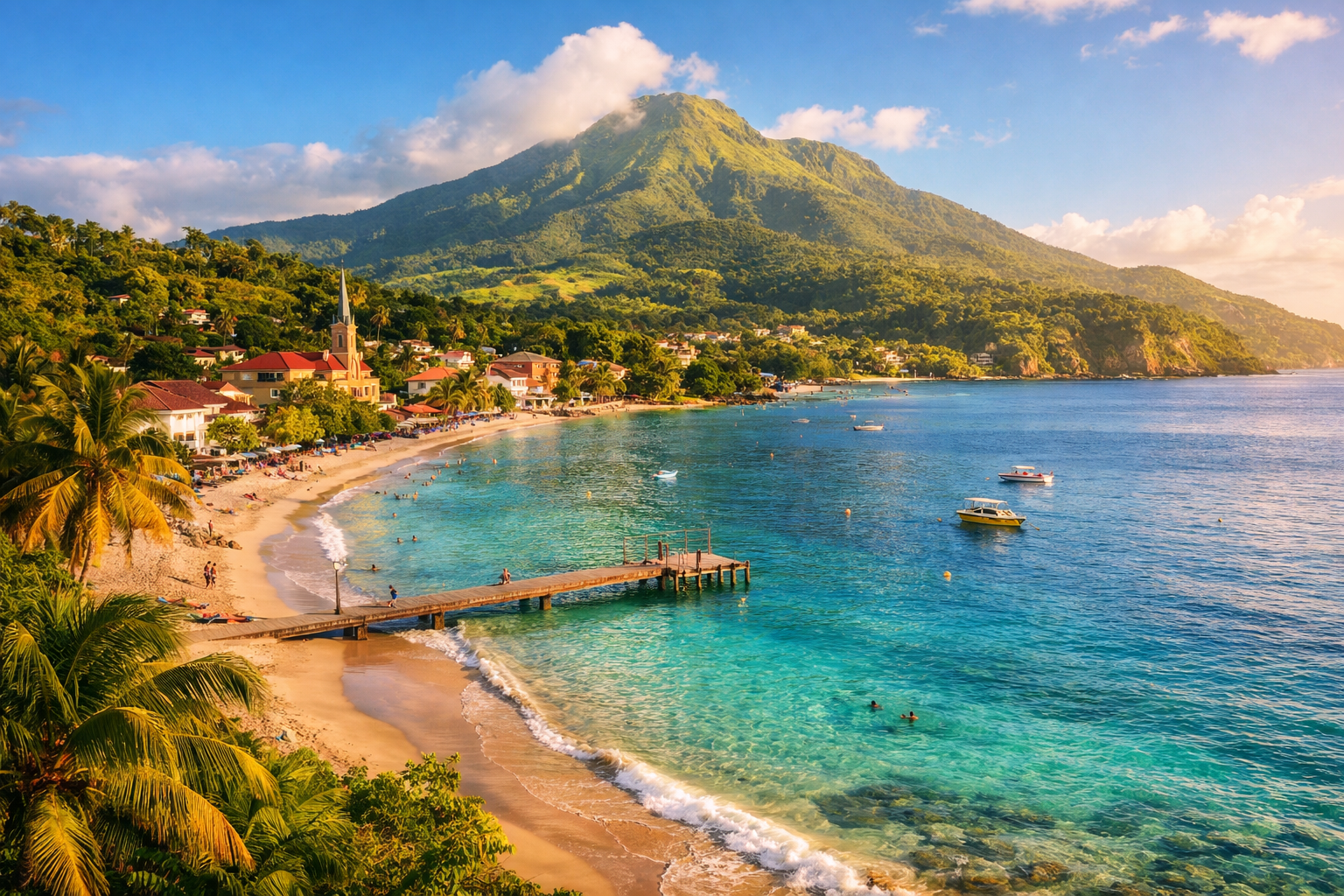
Martinique – often called L’île aux fleurs (the island of flowers) – sits between Dominica and St. Lucia in the Lesser Antilles. As an overseas region of France, it blends European sophistication with vibrant Caribbean rhythm. You’ll find volcanic mountains draped in rainforest, colonial-era forts, rum distilleries and Creole villages. Because Martinique is part of the European Union, you can expect good infrastructure, the euro currency and a high standard of public services. French is the official language and Creole is widely spoken; learning a few phrases like bonjour will earn warm smiles. English is not spoken everywhere, so prepare to carry a phrase book or translation app.
Whether you’re drawn to the turquoise coves of Les Anses d’Arlet, the rich flavours of rhum agricole, the dramatic slopes of Mont Pelée or the lush gardens of Balata, Martinique rewards travellers with variety and authenticity. Use this guide to plan when to visit, what to see, how to prepare and insider tips for a memorable trip.
Click here to book your trip today
Get your swimwear and apparel for your trip from foreplay boutique today.
Best Time to Visit
The island enjoys a tropical climate with warm temperatures year‑round; highs hover around 80 °F (27 °C). The dry season runs from mid‑December through April, making it the most popular time for travellers. During these months you can expect sunshine, low humidity and major events like Carnival and the traditional Yole Boat Race.
The shoulder seasons – May–June and November – bring slightly higher humidity and occasional showers, but you’ll enjoy thinner crowds and lower prices. Surf competitions and hiking tours happen during these months.
From July through October, the wet season coincides with the Atlantic hurricane season. Storms are possible and accommodation prices drop, but energetic events such as Tour des Yoles Rondes (a traditional boat regatta) and Bastille Day celebrations keep the island lively. If you travel during this period, purchase travel insurance and monitor weather forecasts.
Top Places to Visit in Martinique
Fort‑de‑France & Fort St Louis
Martinique’s bustling capital, Fort‑de‑France, mixes modern shopping streets with colonial architecture and lively markets. At its waterfront stands Fort St Louis, an imposing citadel built in 1640 to defend the harbour. Guided tours lead you through its dungeons and ramparts (portions of the site are still an active French naval base) while panoramic views encompass the bay and city. Nearby, stroll through La Savane Park, sample Creole spices at the covered market and visit the 19th‑century Saint‑Louis Cathedral.
Rum Distilleries
Unlike most Caribbean islands that produce molasses‑based rum, Martinique crafts rhum agricole from freshly pressed sugar‑cane juice. Three historic distilleries offer immersive tours:
- Distillerie La Favorite – a family‑run operation founded in 1842 that still uses a century‑old steam engine.
- Habitation Clément – part distillery, part museum; you can wander through colonial buildings, learn about fermentation and finish with tastings of aged rum.
- Distillerie Depaz – located at the foot of Mont Pelée, this estate features manicured grounds and spectacular views. The tour explains how volcanic soil influences cane flavour.
Rum tastings are often paired with local delicacies like fritters and fresh fruit. Drivers should designate a sober companion and purchase bottles to take home.
Beaches: Les Anses d’Arlet, Anse Noire & Anse Dufour, Plage du Diamant & Les Salines
Martinique boasts diverse beaches, from postcard‑perfect bays to wild surf breaks.
- Les Anses d’Arlet – a fishing village on the southwest coast renowned for its colourful Creole houses, white‑sand beach and photogenic pier. The calm waters are ideal for families, snorkelers and paddleboarders. Beachside restaurants serve grilled lobster and accras (salt-cod fritters).
- Anse Noire & Anse Dufour – neighbouring coves separated by a small headland. Anse Noire is one of the island’s only black‑sand beaches (formed by volcanic ash), while Anse Dufour boasts golden sands. Both offer clear turquoise water and are excellent spots for swimming with sea turtles. Arrive early to secure parking and bring snorkel gear.
- Plage du Diamant – stretching for over a mile, this surf‑swept beach faces the iconic Rocher du Diamant (Diamond Rock), a 175‑metre basalt pinnacle once used as a British naval fort. The waves can be rough; lifeguards are rarely present, so swim with caution. The town of Le Diamant has cafés, craft shops and the poignant Anse Cafard Slave Memorial nearby.
- Grande Anse des Salines – often cited as one of the Caribbean’s prettiest beaches, Les Salines is located near Sainte‑Anne on the southern tip. Protected by offshore reefs, its powdery white sand and shallow waters make it perfect for families and sunsets. Vendors sell fresh coconuts and sorbet along the promenade.
Mont Pelée
Dominating the northern skyline, Mont Pelée is an active stratovolcano standing 1,397 m (4,583 ft). Its catastrophic 1902 eruption buried the city of Saint‑Pierre and killed nearly 30,000 people. Today, well‑marked trails allow hikers to explore its slopes.
The L’Aileron trail is a 4‑hour round trip that ascends through tropical forest to the summit’s lunar landscape; the shorter Grande Savane route takes about two hours. Start early (before 7 am) to avoid clouds, and carry water, snacks, rain gear and extra layers because weather changes quickly. Guides can enhance your understanding of the volcano’s geology and flora. On clear days you’ll see neighbouring islands and the Caribbean Sea stretching to the horizon.
Jardin de Balata
Just 10 km north of Fort‑de‑France, Jardin de Balata is a botanical masterpiece created by horticulturist Jean‑Philippe Thoze. The seven‑acre garden opened in 1986 and hosts over 3,000 species of tropical plants arranged along winding paths. Colourful heliconias, bromeliads and orchids line water lily ponds, and hummingbirds dart between blossoms.
The highlight is the Treetop Trail, a series of suspension bridges suspended 50 ft above ground among 100‑year‑old mahogany trees. Only two visitors can cross each bridge at a time, making it a thrilling yet safe experience that offers aerial views of the garden, the Bay of Fort‑de‑France and the Pitons du Carbet. Jardin de Balata is open daily from 9 am to 6 pm; last entry is at 4:30 pm.
Anse Cafard Slave Memorial
Overlooking the Diamond Coast, the Anse Cafard Slave Memorial (Mémorial Cap 110) commemorates victims of slavery and a tragic 1830 shipwreck. Fifteen concrete statues stand eight feet tall, arranged in a triangle facing 110° toward the Gulf of Guinea, symbolising the triangular trade and the direction of Africa. The figures’ solemn expressions evoke both pain and resilience.
The memorial, created in 1998 for the 150th anniversary of abolition, honours the 1830 disaster in which more than 40 enslaved Africans drowned near Diamond Rock. Visitors are encouraged to walk among the statues, reflect on their history and consider the cultural roots of modern Martinique.
Additional Highlights & Activities
- Explore Saint‑Pierre – Once the “Paris of the Caribbean”, Saint‑Pierre was obliterated by the 1902 eruption of Mont Pelée. Today its atmospheric ruins, like the theatre and prison cell where one man miraculously survived, provide a poignant historical journey.
- Climb Diamond Rock – While landing on the rock itself is prohibited, boat tours circle this impressive basalt pinnacle used by the British as a naval fortress in 1804. Snorkelers enjoy clear water and abundant fish at its base.
- Hike the Caravelle Peninsula – On the eastern coast, this nature reserve features hiking trails through dry forest and mangroves to the ruins of Château Dubuc, a former sugar plantation. Birders can spot herons and frigatebirds.
- Attend Yole Boat Races – Traditional Martinican sailboats (yoles) compete in colourful regattas throughout the year, including the week‑long Tour des Yoles Rondes in July and the Yole Festival in January.
- Taste Creole cuisine – Sample dishes like colombo de poulet (curried chicken), boudin créole (blood sausage) and freshly caught lobster. Finish with a Ti’ Punch, the island’s national drink made with rhum agricole, lime and cane syrup.
Travel Tips & Practical Information
Entry Requirements & Currency
Because Martinique is an overseas department of France, EU travellers need only a national ID card, while others require a passport. U.S. and Canadian citizens do not need a visa for tourist stays under 90 days. The currency is the euro (€); US dollars and Caribbean dollars are not accepted. Carry cash for small purchases because some rural businesses lack card machines. ATMs are widely available in Fort‑de‑France and at the airport.
Language & Culture
French is the official language; Martinican Creole (Kréyol) is widely spoken. English is limited, especially outside tourist areas, so learning basic French phrases (bonjour, merci, s’il vous plaît) will help interactions. Etiquette is important – greet shopkeepers when entering, dress respectfully in towns, and avoid wearing beachwear in villages or restaurants.
Transportation
Renting a car is the most convenient way to explore; roads are generally in good condition but can be narrow and winding. Drive on the right side (unlike some Caribbean islands). Petrol stations accept cards, but fill up during the day as rural stations close early. Public buses and collective taxis operate between major towns; ferries connect Fort‑de‑France with Les Trois‑Îlets and the south coast. Taxis are available but expensive, and ride‑hailing services like Uber are not yet present. Always agree on a fare before departing.
Safety & Health
Martinique is relatively safe, but petty crime occurs. Avoid deserted beaches after dark, keep valuables out of sight and use hotel safes. Credit‑card and ATM fraud have been reported; use bank ATMs and cover your PIN.
For water activities, observe lifeguard flags and heed local authorities; ensure your travel insurance covers snorkelling, diving or sailing. Hikers should not venture alone – hire licensed guides, stay on marked trails and inform someone of your itinerary.
Mosquitoes can carry dengue and chikungunya; pack insect repellent, long sleeves and consult a doctor about vaccinations. Drink plenty of water, wear mineral (reef‑safe) sunscreen and consider a rash guard when swimming because of strong sun.
Packing & Budget
Pack lightweight cotton clothing, swimwear and sandals, plus a rain jacket and hiking shoes for Mont Pelée. Bring a refillable water bottle and quick‑dry towel. Adaptors are not necessary if your devices use European plugs; electrical voltage is 220 V.
Martinique can be mid‑range to pricey. Expect accommodation prices around €50–180 per night, meals for two between €25 and €120, public transport €1.50–10 and taxi fares €30–90. Shopping at markets, picnicking and visiting free beaches keep costs lower. Booking flights and hotels well ahead for peak season helps secure deals.
Interesting Facts about Martinique
- Mont Pelée’s 1902 eruption destroyed the then capital Saint‑Pierre in minutes; only one known prisoner survived, sparking global attention.
- Rhum agricole from Martinique has an Appellation d’Origine Contrôlée, like French wines; production follows strict guidelines and uses only fresh cane juice.
- The Anse Cafard Slave Memorial’s orientation at 110° points toward the Gulf of Guinea where many Africans embarked on the Middle Passage.
- Jardin de Balata’s Treetop Trail offers canopy views 50 ft above ground and is limited to two people at a time for safety.
- Les Anses d’Arlet’s pier is one of the most photographed spots in the Caribbean, with turquoise water lapping below colourful houses.
- Martinique’s national music is bèlè and zouk; you can hear live performances in local bars and at the annual Biguine Jazz Festival.
Conclusion
Martinique fuses tropical beauty, history and French flair. Wander the bustling markets of Fort‑de‑France, sip aged rum amid sugar‑cane fields, hike into the cloud forest of Mont Pelée and stand in silence before the Anse Cafard Memorial. Relax on a black‑sand beach one day and a white‑sand paradise the next. With careful planning, a few French phrases and respect for local customs, your trip will be rich in culture, adventure and flavours.
Click here to book your trip today
Get your swimwear and apparel for your trip from foreplay boutique today.
Leave a Reply