Introduction
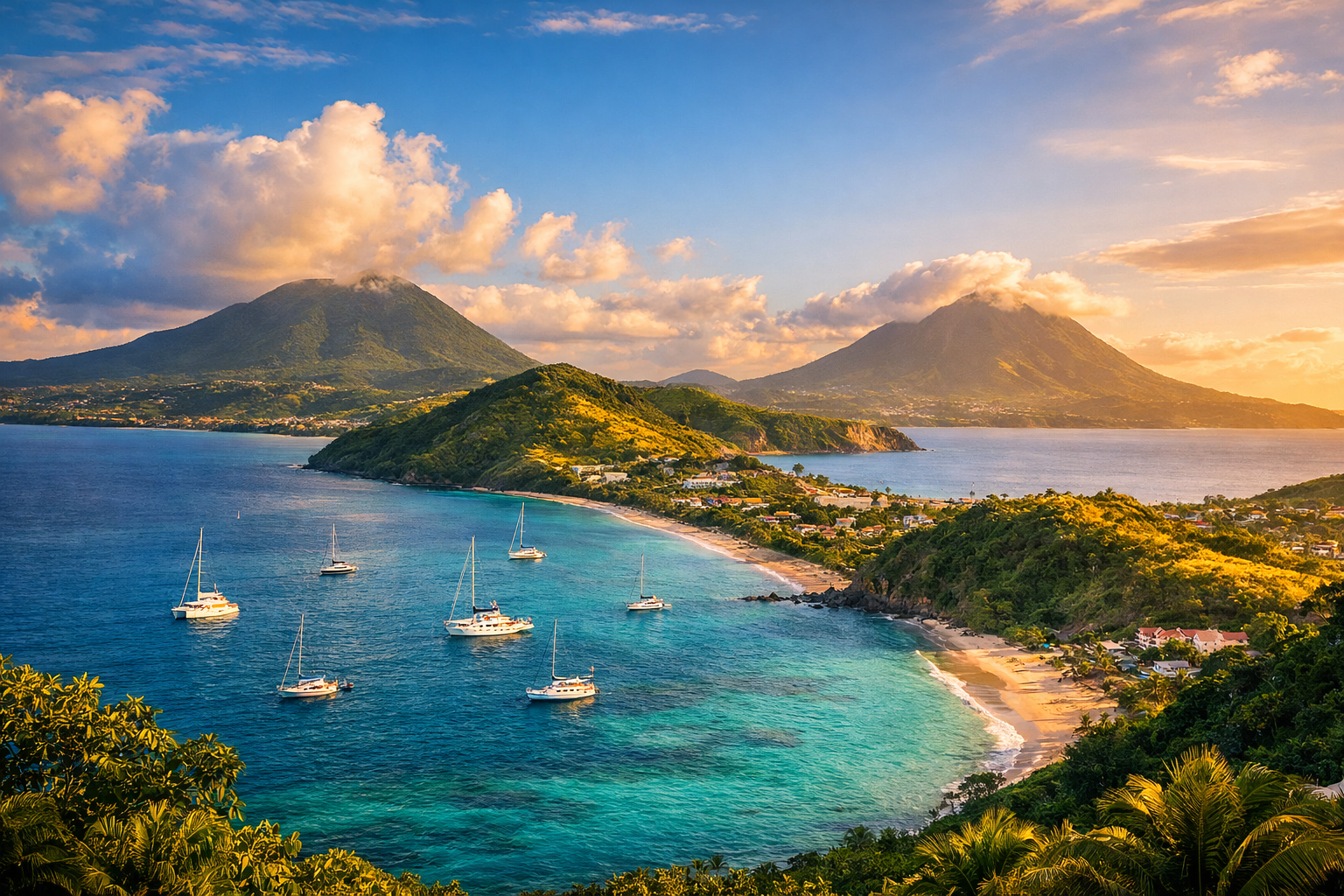
In the heart of the Lesser Antilles sits St Kitts & Nevis, a two‑island nation that pairs unspoiled nature with centuries of history and vibrant Caribbean culture. St Kitts is the larger and livelier of the pair, known for its colonial fortresses, former sugar plantations, scenic railway and energetic beach bars. Nevis, the smaller sister island across the narrows, charms visitors with rainforest‑covered peaks, white‑sand beaches, quiet villages and a captivating past. Together, these islands offer something for every traveler — from outdoor adventures and historical tours to culinary delights and wellness escapes. This guide highlights the top places to visit on each island, key activities, and practical tips for planning an unforgettable trip.
Click here to book your trip today
Get your swimwear and apparel for your trip from foreplay boutique today.
Top Places & Things to Do in St Kitts
Brimstone Hill Fortress National Park
This UNESCO World Heritage Site is one of the Caribbean’s most impressive fortifications. Built by British engineers and African slaves in the 17th and 18th centuries, Brimstone Hill Fortress was nicknamed the “Gibraltar of the West Indies.” The massive limestone walls and cannon‑lined bastions offer sweeping views of the Caribbean Sea and neighboring islands. Wander through the visitors’ center to learn about the island’s military history and enjoy panoramic photo opportunities from the top.
St Kitts Scenic Railway
Once used to transport sugar cane from plantations to the port, the St Kitts Scenic Railway is now a unique tourist attraction. This double‑decker train chugs past rolling sugar‑cane fields, villages and historic estates, providing a relaxing way to see the island’s lush landscapes. Onboard guides share stories of the island’s past while you sip rum punch and listen to local choirs.
Basseterre & Independence Square
The capital, Basseterre, blends colonial heritage with modern Caribbean life. Stroll around Independence Square, once the site of a slave market, and admire Georgian architecture at the Circus and Treasury Building. Wander through the Amina Craft Market to pick up handmade jewelry and spices, then relax at a café along the waterfront.
Frigate Bay & South Friar’s Bay
Just south of Basseterre, Frigate Bay offers a lively beach scene split between two shores. The calm Caribbean side is ideal for swimming and sunbathing, while the Atlantic side attracts surfers and adventure seekers. Nearby South Friar’s Bay provides a more laid‑back vibe with beach bars, restaurants and water‑sports rentals.
Mount Liamuiga
For hikers, the trek up Mount Liamuiga is a must. This dormant volcano rises 1,156 m (3,793 ft) above sea level, and the hike to its crater rim winds through lush rainforest. The challenging climb culminates in breathtaking views of the island and neighboring Nevis. Guides are recommended, as the trail can be steep and muddy.
Romney Manor & Caribelle Batik
Once owned by ancestors of Thomas Jefferson, Romney Manor today houses Caribelle Batik, where artisans create vibrant batik fabrics using wax‑resist dyeing techniques. The estate is set amid manicured gardens and overlooks the rainforest. Visitors can watch demonstrations, browse the shop for locally made textiles and wander the grounds to see the towering saman tree — said to be more than 350 years old.
Snorkeling, Diving & Sugar Estate Tours
The waters around St Kitts teem with colorful coral reefs and marine life. Popular dive sites include Sandy Point and Turtle Beach, where you might swim alongside sea turtles and explore shipwrecks. Back on land, take a sugar estate tour to learn how the island’s once‑dominant sugar industry shaped its history. Estates such as Fairview Great House and the Wingfield Estate feature restored plantation houses, ruins and botanical gardens.
Local Cuisine & Nightlife
St Kitts’ food scene reflects African, Creole and Caribbean influences. Don’t miss dishes like goat‑water stew, conch fritters and spiny lobster. The Strip at Frigate Bay hosts beach bars and restaurants where you can eat grilled lobster with feet in the sand, sip rum punch and listen to live soca music late into the night. Kittitian rum, made from island-grown sugar cane, pairs perfectly with sunset.
Top Places & Things to Do in Nevis
New River & Coconut Estates
During the 17th and 18th centuries, Nevis was one of the wealthiest sugar economies in the British West Indies. Although sugar cane cultivation has disappeared, visitors can still explore ruins of plantation estates and sugar works. At the New River and Coconut Estates on the island’s east coast, wander among the remains of the Great House, windmills and steam engine that once powered the mills. Some former plantations, like Montpelier Plantation & Beach, have been transformed into atmospheric inns, offering a romantic glimpse into the island’s past.
Pinney’s Beach
Nevis boasts several beaches of white and golden sand. Pinney’s Beach, stretching along the western shore, is among the best. Book a day in a private cabana at the Four Seasons Resort and you’ll enjoy butler service, comfortable loungers, Wi‑Fi and access to translucent blue water. Nevis is a celebrity hideaway, so you might spot famous faces while savoring the view. Nearby Sunshine’s Beach Bar & Grill is legendary for its Killer Bee cocktail, grilled lobster and barbecue ribs. Don’t leave without signing the bar’s Wall of Fame.
Diving & Watersports at Oualie Beach
With underwater visibility of 80–100 ft, Nevis offers fantastic snorkeling and diving. Around Oualie Beach, a 5‑star PADI dive center leads trips to more than 40 dive sites featuring caves, ledges, reefs and wrecks. You can also book kayaking or paddleboarding tours to explore the calm bays.
Hiking Nevis Peak & Outdoor Adventures
If you’re feeling adventurous, tackle the steep slopes of Nevis Peak, a stratovolcano soaring 985 m (3,232 ft) in the center of the island. The climb passes through cloud forest and rewards you with expansive views at the summit. For water lovers, the annual Nevis to St Kitts Cross Channel Swim challenges swimmers to cross the 2.5‑mile channel; it has been a tradition for nearly 25 years and takes place each spring.
Charlestown & Alexander Hamilton Museum
Nevis’s capital Charlestown is small, walkable and steeped in 18th‑ and 19th‑century Georgian architecture. It’s free of high-rise resorts and fast‑food chains, giving it an authentic charm. The Museum of Nevis History sits on the site of Alexander Hamilton’s birthplace and explores the life of the Founding Father. After touring the museum, wander through the town square, market and historic churches.
Bath Hot Springs & Heritage Village
Natural hot springs bubble at the foot of the Bath Hotel, built in 1778. Visitors can soak in the volcanic springs — one of the island’s top free attractions. The adjacent Bath Hotel (no longer a hotel) is worth a photo for its 18th‑century architecture. For deeper cultural immersion, head to the Nevisian Heritage Village, an open‑air museum that showcases traditional dwellings from Carib indigenous people through colonial plantation architecture.
Liming, Cuisine & Nightlife
Nevis may be quieter than St Kitts, but there’s still plenty of nightlife. Join a liming session (Caribbean slang for relaxing and socializing) at local rum shops and beach bars. Patterson’s Pub Crawl is a popular tour that takes visitors off the tourist track to sample jerk pork and barbecue ribs while dancing to calypso and soca music. Be sure to try Nevisian specialties like goat curry, conch chowder and mango salads.
Highlights & Activities Across Both Islands
Water‑Based Adventures
- Snorkeling & Diving: Vibrant coral reefs surround both islands. Dive the underwater wall at Sandy Point or join a snorkel tour on Nevis to explore reefs with sea fans and sponges.
- Sailing & Boat Tours: Charter a catamaran for a day cruise, sign up for a sunset sail or take the ferry across the narrows to Nevis. The St Kitts–Nevis ferry operates six vessels, takes about 45 minutes and provides scenic views.
- Kayaking & Paddleboarding: Calm bays like Frigate Bay’s Caribbean side and Nevis’s Pinney’s Beach are ideal for paddling. For thrills, try kiteboarding on the Atlantic side at Frigate Bay.
- Sport Fishing & Water Sports: Offshore charters target marlin, mahi‑mahi and tuna. Closer to shore, you can parasail, jet ski or take a banana boat ride at Frigate Bay.
Land‑Based Activities
- Hiking & Nature: Beyond Mount Liamuiga and Nevis Peak, explore trails through rainforests and former sugar plantations. On St Kitts, the hike to Timothy Hill offers sweeping views of the Atlantic and Caribbean; on Nevis, the Golden Rock Nature Trail winds through botanical gardens and monkey habitat.
- Historical & Cultural Tours: Tour restored plantations such as Fairview Great House and Wingfield Estate on St Kitts. In Nevis, visit New River Estate, Charlestown, Cottle Church (the Caribbean’s first integrated church), and Hamilton House for a history lesson.
- Shopping & Culinary Experiences: Basseterre’s craft markets and Charlestown’s artisan shops sell batiks, rum, hot pepper sauce and wooden carvings. Food festivals such as the St Kitts Music Festival (June) and Nevis Mango & Food Festival (July) showcase local produce, seafood and music. Book a cooking class to learn how to prepare Kittitian and Nevisian dishes.
Travel Tips
Climate & Best Time to Visit
St Kitts and Nevis have a tropical climate, hot and humid year‑round. The islands experience a cool, dry season from January to mid‑April and a hot, humid rainy season from mid‑June to mid‑November. Average temperatures in Basseterre range from about 77 °F (25.5 °C) in January and February to 82 °F (28 °C) from June to October. Rainfall peaks between July and December and is lowest between January and April. Hurricane season runs from June to November, with the highest risk in August and September. The best time to visit is December through April, when it is cooler and outside the hurricane season.
Currency & Banking
The official currency is the Eastern Caribbean Dollar (XCD), pegged to the US dollar at EC$2.70 = US$1. US dollars are widely accepted, but change is often given in EC dollars and at a less favourable rate. ATMs dispense EC dollars, and major credit cards are accepted at hotels and large restaurants. Clarify whether prices are in EC$ or US$ to avoid confusion.
Language & Etiquette
English is the official language, though locals often speak Kittitian or Nevisian Creole. Greeting people with “Good morning” or “Good afternoon” is appreciated. It’s considered disrespectful to wear swimwear away from the beach and to use profanity in public. Tipping about 10–15% is customary if service charge isn’t included.
Getting Around
Driving: St Kitts and Nevis drive on the left-hand side. Visitors need to obtain a temporary driver’s permit, which costs EC $62.50 (about US $24) for three months. Seatbelts are mandatory, and you should obey local speed limits and avoid drinking and driving. Car rentals are available at the airport, and roads are generally well paved but can be narrow and winding.
Ferry: The ferry between St Kitts and Nevis operates six vessels and takes about 45 minutes. One‑way fares cost XCD 25 (US $10) for adults and XCD 15 (US $6) for children. Ferries depart regularly from Basseterre (St Kitts) and Charlestown (Nevis). Another option is the Sea Bridge car ferry from the Southeast Peninsula.
Taxis & Tours: Taxis are plentiful on both islands and can double as tour guides. It’s common to negotiate the rate before starting the trip. Many hotels can arrange island tours or water taxi transfers to Nevis.
Electricity & Connectivity
Electrical current is 230 V (60 Hz), though most hotels offer a 117 V supply. Plugs use round three‑pin or rectangular blade pins (similar to the UK). Bring an adapter if your devices use a different plug. Wi‑Fi is widely available in hotels, cafés and restaurants, and local SIM cards can be purchased for unlocked phones.
Health & Safety
No vaccines are required for entry, but hepatitis A, hepatitis B and typhoid vaccinations are recommended. Mosquito‑borne illnesses like dengue and Chikungunya occur year‑round, so pack insect repellent and wear long sleeves at dawn and dusk. The main hospital on St Kitts can handle many treatments, but serious cases may require medical evacuation; comprehensive travel insurance is highly recommended. Use hotel safes, avoid remote beaches after dark and beware of strong currents when swimming. Hurricane season requires monitoring weather forecasts and having contingency plans.
Cultural Etiquette & Customs
Public displays of affection may attract attention, and wearing camouflage clothing is illegal. Locals are generally conservative; show respect by dressing modestly when visiting villages and churches. During the August Culturama festival in Nevis, and the December St Kitts Carnival, expect colourful parades, music and street parties celebrating emancipation and independence. Check local calendars for festival dates.
Interesting Facts & History
- Twin‑Island Federation: St Kitts (also called Saint Christopher) and Nevis were colonized by both the British and French before becoming a British colony; they achieved independence in 1983.
- Volcanic Peaks: Mount Liamuiga and Nevis Peak are extinct volcanoes that form the islands’ highest points.
- Sugar & Slavery Legacy: St Kitts was the first island in the Eastern Caribbean to establish a sugar economy. Ruins of sugar mills and plantations dot both islands, and many have been converted to museums or hotels.
- Alexander Hamilton’s Birthplace: The U.S. Founding Father was born in Charlestown in 1755. The Museum of Nevis History commemorates his life.
- UNESCO & Wildlife: Brimstone Hill Fortress is a UNESCO World Heritage site. Offshore, the marine environment supports sea turtles, dolphins and whales — look out for them on boat tours.
- Culturama & Carnival: Nevis’s Culturama festival (late July/early August) celebrates emancipation with parades, calypso shows and a queen pageant, while St Kitts Carnival (December/January) fuses Christmas traditions with carnival revelry.
Conclusion
From the imposing walls of Brimstone Hill Fortress and the rhythmic chug of the St Kitts Scenic Railway to the serene shores of Pinney’s Beach and the steamy Bath Hot Springs, St Kitts & Nevis deliver an intoxicating mix of adventure, relaxation and cultural discovery. The islands’ sugar‑cane past still echoes through crumbling mills and stately plantation houses, while their present pulses with music festivals, fresh seafood and friendly locals. By timing your visit during the dry season, packing appropriately and respecting local customs, you’ll be ready to explore lush rainforests, climb volcanic peaks and immerse yourself in the unique twin‑island spirit. Whether you’re planning a honeymoon, family holiday or solo escape, St Kitts & Nevis promise Caribbean memories that last a lifetime.
Click here to book your trip today
Get your swimwear and apparel for your trip from foreplay boutique today.