Introduction
Lush rainforest, volcanic peaks and pristine beaches make St. Lucia one of the Caribbean’s most dramatic islands. Although it measures just 27 miles long and 14 miles wide, its diverse geography packs everything from palm‑fringed coves to soaring mountains. In the north you’ll find the capital Castries and the resort hub of Rodney Bay, while the quieter south harbors natural wonders like the Pitons, Soufrière volcano and offshore nature reserves. The western coastline, washed by the tranquil Caribbean Sea, offers family‑friendly beaches, whereas the Atlantic‑facing east attracts wind‑ and kite‑surfers. Whether you’re craving adventure, relaxation or culture, this guide will help you plan an unforgettable trip.
Click here to book your trip today
Get your swimwear and apparel for your trip from foreplay boutique today.
Main Content
Overview of St. Lucia
Geography & Climate. Part of the Windward Islands between Martinique and St. Vincent, St. Lucia boasts exotic beaches, luxury resorts, striking scenery and its iconic twin peaks. The island enjoys a tropical climate with temperatures around 27 °C (81 °F) year‑round. Dry season runs from December to April—peak tourism months—while the shoulder season of May – June offers fewer crowds and lower prices; hurricane season spans late June through November, so travelers should monitor weather forecasts.
North vs. South. St. Lucia’s north is bustling. Castries hosts the main cruise port and a lively craft market, and nearby Rodney Bay features resorts, a marina, casino and shopping mall. The south, centered on Soufrière, feels quieter and more authentic. Here you’ll discover the Sulphur Springs drive‑in volcano, the Pitons, historic plantations and secluded beaches. Car hire is easy and taxis have fixed fares.
Top Places to Visit
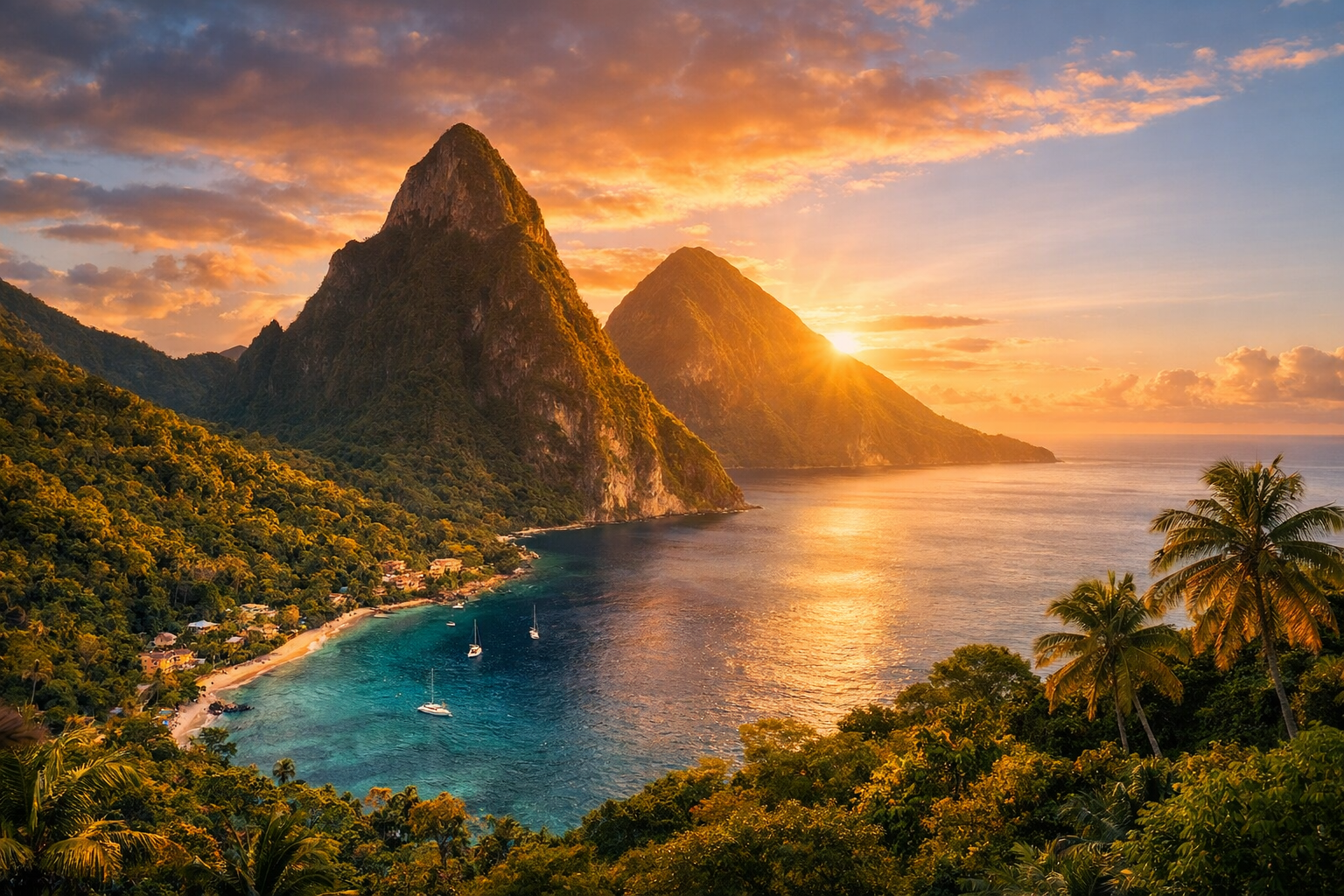
The Pitons: St. Lucia’s postcard‑perfect symbols—Gros Piton (2,618 ft/798 m) and Petit Piton—are volcanic spires that rise dramatically from the sea. These UNESCO‑listed peaks were named by indigenous people after their gods; Gros Piton is the easier climb. Guided hikes (about four hours round trip) reward you with panoramic views of the island and Caribbean Sea. On clear days you may spot neighboring islands.
Sulphur Springs & Drive‑in Volcano: Near Soufrière, the Soufrière drive‑in volcano is the world’s only volcano where a road leads right into a collapsed crater. The volcano last erupted in the 1700s and still emits sulfuric steam. Visitors can soak in hot mineral pools and coat themselves in therapeutic mud said to reduce inflammation and soothe skin. After mud‑bathing, rinse off under the nearby Toraille Waterfall—a 50‑ft cascade surrounded by rainforest.
Pigeon Island National Park: Once a pirate hideout connected to the mainland by a causeway, Pigeon Island has a rich history. French privateer Jacques “Peg‑Leg” Jambe de Bois used the island as a base in the 1550s, and during later conflicts the British fortified it with barracks and cannons. Today, visitors can climb to the ruins of Fort Rodney, explore a small museum and enjoy sandy beaches. Don’t miss the panoramic views of Rodney Bay and the distant Pitons.
Marigot Bay: A classic Caribbean cove framed by palms and steep hills, Marigot Bay blends natural beauty with modern amenities. Some areas have upscale resorts and marinas, while secluded coves are accessible only by boat. Take a water taxi across the lagoon, dine at waterfront restaurants or simply relax on the beach.
Anse de Sables (Sandy Beach): Located near the southern tip, Anse de Sables is one of St. Lucia’s largest beaches. Reefs shelter the bay and constant trade winds make it ideal for wind‑ and kite‑surfing. Though restaurants and the town of Vieux Fort are nearby, the beach feels laid‑back. Families with small children may prefer calmer west‑coast beaches.
Millet Bird Sanctuary: Nature lovers shouldn’t miss this forest reserve where over 30 bird species, including the island’s endemic St. Lucia parrot (Jacquot), thrive. A 3 km trail climbs to a 300 m‑high clearing with panoramic views; feeding stations along the way increase sightings. Bring binoculars for the best experience.
Quilesse Forest Reserve: Off the beaten path, the Des Cartiers trail leads hikers through pristine rainforest. You might spot the St. Lucia parrot and other endemic species. Contact the forestry department to arrange a ranger escort.
Rodney Bay & Gros Islet: Although developed, Rodney Bay serves as a gateway to Pigeon Island and the fishing village Gros Islet. Nearby unspoiled beaches contrast with the marina, mall and casino. On Friday nights, the streets of Gros Islet host a famous street party featuring local music, barbecues and rum punches. It’s a great place to mingle with locals.
Cocoa Plantation Tours: Chocolate lovers can tour Rabot Estate or other cocoa farms, where you’ll learn how cacao is planted, harvested and roasted. Visitors can try their hand at making chocolate. Many plantations supply international brands like Hotel Chocolat, making this both an educational and delicious excursion.
Things to Do & Highlights
- Outdoor activities: Beyond climbing the Pitons, you can hike the Tet Paul Nature Trail for easier views, zip‑line through the rainforest, or snorkel around coral reefs. Wind‑surfers flock to Anse de Sables, while kite‑surfers prefer the Atlantic coast. Birders should visit the Millet Sanctuary and Quilesse Reserve.
- Beaches: West‑coast beaches like Reduit Beach and Anse Chastanet offer calm waters ideal for swimming and families. Marigot Bay and Pigeon Island provide picture‑perfect settings.
- Cultural experiences: Explore Castries Market for local crafts and spices, join the Gros Islet Friday Night Street Party for music and seafood, or visit the Folk Research Centre for cultural exhibits. Sampling St. Lucia’s diverse cuisine—an amalgam of Amerindian, African, French and British influences—is a must. Try dishes like green figs and saltfish, lambi (conch) and paime, and head to the Gros Islet fish fry for fresh seafood.
- Rum & Chocolate: St. Lucia’s Roseau Valley boasts numerous distilleries and is home to 21 different types of rum. Take a distillery tour and sample local flavours. Many cocoa plantations allow visitors to craft their own chocolate bars.
- Festivals & Events: St. Lucia hosts the Saint Lucia Jazz & Arts Festival in May, bringing international musicians. The annual Carnival (typically in July) features parades and calypso, while La Rose and La Marguerite celebrate unique floral societies.
Travel Tips
Best time to visit. Peak season is December–April when visitors escape winter, but this is also the busiest and most expensive period. Shoulder months May–June offer pleasant weather and better deals. Hurricane season runs June–November, so consider travel insurance and monitor forecasts.
Getting there & around. St. Lucia has two airports—Hewanorra International (UVF) near Vieux Fort and George F. L. Charles (SLU) in Castries—which are serviced by more than a dozen airlines. Cruise ships and ferries dock at Port Castries and Soufrière. Public transportation is limited: minibuses run unscheduled routes and are often crowded. Many visitors rent a car for flexibility—remember to drive on the left, prepare for steep and potholed roads, and consider a 4‑wheel drive vehicle. Taxis and water taxis are plentiful but negotiate fares beforehand.
Language & Currency. English is the official language, while locals speak a French‑based Creole called Kwéyòl (Patois). The currency is the Eastern Caribbean Dollar (EC$), linked to the U.S. dollar. U.S. dollars are widely accepted, but carrying both currencies is wise since small vendors and public transport often require cash. ATMs and banks are available across the island. Some establishments do not accept cards, so bring small bills. Electrical sockets are three‑pronged UK‑style and operate at 240 volts—bring a voltage converter and adapter.
Safety & Health. St. Lucia is generally safe, but petty theft can occur. Use authorized taxis with light blue license plates starting with TX, avoid carrying large amounts of cash and keep valuables secure. Avoid visiting during hurricane season and be cautious of fearless local drivers and narrow roads. Swimming is safe on calm west‑coast beaches; always heed local warnings. Pack reef‑safe sunscreen, insect repellent and a hat—mosquitoes emerge in the evenings. Vaccinated travelers currently face no COVID‑19 restrictions, but unvaccinated visitors may require pre‑departure testing. Obtain up‑to‑date health guidance from official sources.
Packing & Preparation. Pack light clothing, swimsuits and hiking gear for the Pitons. Bring cash (including small bills) since ATMs are not ubiquitous. Reef‑safe sunscreen, sunglasses, a wide‑brimmed hat and insect repellent are must‑haves. Consider a waterproof phone case for Sulphur Springs. Leave expensive jewelry at home; tipping around 10–12% is customary for good service. Finally, verify if you need a power converter and travel adapter.
Interesting Facts about St. Lucia
- Named after a woman: St. Lucia is one of only two countries (along with Ireland) named after a woman—Saint Lucy of Syracuse.
- Independence: After changing hands between the French and British numerous times, St. Lucia gained independence in 1979.
- National bird: The St. Lucia parrot (Jacquot) is endemic and serves as the national bird. Birdwatchers can spot it in reserves like Millet and Quilesse.
- UNESCO‑listed Pitons: The island’s twin peaks—the Pitons—are part of the Pitons Management Area, a World Heritage Site that provides unique habitats and inspired the name of St. Lucia’s Piton beer.
- World’s only drive‑in volcano: St. Lucia’s Sulphur Springs is the planet’s only volcano with a road into its crater. Visitors can drive in, soak in mud baths and feel the Earth’s geothermal energy.
- Rum & Chocolate: The Roseau Valley boasts 21 types of rum, and you can craft your own chocolate bar on plantation tours.
- Rainforest coverage: Over 70% of St. Lucia is covered in rainforest, offering lush trails, waterfalls and biodiversity.
- Pirate lore: Famous pirates Jambe de Bois and Blackbeard visited St. Lucia; legends suggest that Blackbeard buried treasure in Vieux Fort.
- Birdlife: The island hosts 180 species of birds and six endemic species.
- Nobel laureates: St. Lucia has produced two Nobel Prize winners—economist Sir Arthur Lewis and poet Derek Walcott—giving it more laureates per capita than any other country.
Conclusion
St. Lucia’s blend of volcanic landscapes, rainforests and inviting beaches offers a holiday that’s as adventurous or relaxing as you desire. Hike the majestic Pitons, soak in therapeutic mud baths at Sulphur Springs, snorkel in calm coves or explore historical sites on Pigeon Island. Taste rum straight from the source, craft your own chocolate bar and sway to soca rhythms at a Friday night street party. With friendly locals, English as a primary language, widely accepted U.S. currency and an abundance of natural and cultural attractions, St. Lucia is ready to inspire you. Plan your trip during the shoulder season for pleasant weather and great deals, pack wisely and prepare for an island experience like no other.
Click here to book your trip today
Get your swimwear and apparel for your trip from foreplay boutique today.