Ask anyone who has travelled the Caribbean what they remember most, and sooner or later the conversation turns to food. Smoky jerk from a roadside drum, a paper-wrapped doubles eaten standing up, fresh fish at a Friday night fry with music in the background: island food is about flavour, history and community all at once. Every island has its own proud specialities, so here is a hungry traveller’s guide to the dishes worth seeking out and how to eat like a local while you are there.
Jamaica: Jerk, Ackee and Saltfish, and Patties
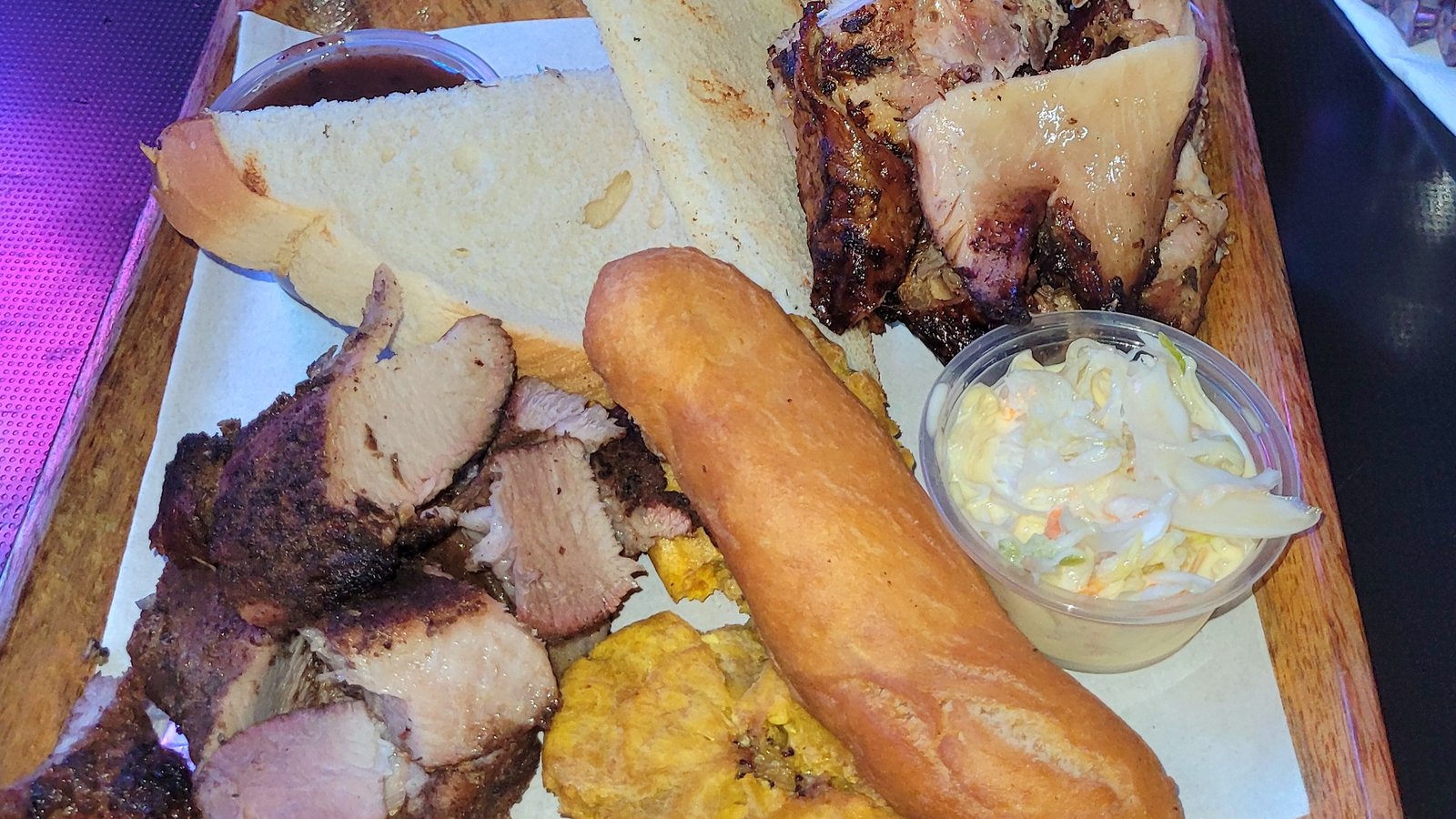
Jerk is Jamaica’s best-known flavour export. Chicken or pork is rubbed with a fiery marinade built on Scotch bonnet peppers, pimento (allspice) and thyme, then cooked slowly over a smoky fire. Boston Bay in Portland is widely celebrated as one of the homes of jerk, but you will find jerk stands and converted oil-drum grills all over the island.
For breakfast, try ackee and saltfish, Jamaica’s national dish. Ackee is a fruit that, once cooked, looks a little like scrambled eggs and pairs perfectly with salted cod, onions and peppers. Serve it with fried dumplings, boiled green bananas or bammy, a flatbread made from cassava. And when you need something quick, a flaky, golden Jamaican patty filled with spiced beef, chicken or vegetables is the island’s favourite grab-and-go snack. Jerk often comes with festival, a slightly sweet fried dumpling, and slices of hard dough bread.
Barbados: Cou-Cou, Flying Fish and Fish Cakes
Barbados’ national dish is cou-cou and flying fish. Cou-cou is a smooth blend of cornmeal and okra, served with flying fish steamed in a seasoned tomato-and-onion sauce. The flying fish is so closely tied to Bajan identity that it appears on the island’s coins and tourism branding.
Snack like a Bajan with fish cakes and “bakes” (small fried breads), or a cutter, a sandwich on a salt bread roll that might be filled with fish, ham or egg. For a true local night out, head to the Friday night fish fry at Oistins on the south coast, where grills, music and dancing turn dinner into a party.
The Bahamas: Conch Every Way
In the Bahamas, conch is king. Conch salad is made from raw conch diced and “cooked” in fresh citrus juice with onion, tomato and hot pepper, a bit like a ceviche. You will also find cracked conch (tenderised and fried), golden conch fritters and hearty conch chowder. In Nassau, Arawak Cay, known locally as the Fish Fry, is a row of colourful seafood shacks and one of the easiest places to try them all. Save room for guava duff, a steamed or boiled dessert rolled with guava and served with a sweet sauce.
Trinidad and Tobago: Doubles, Roti and Bake and Shark
Trinidad’s street food scene is legendary, shaped by African, Indian, Chinese and European influences. Doubles, two pieces of soft fried bread called bara topped with curried chickpeas and chutneys, is the classic breakfast on the go. Roti wrapped around curried meat, potato or vegetables is filling and satisfying any time of day. At Maracas Bay on Trinidad’s north coast, bake and shark, fried fish in fried bread with a long table of toppings and sauces, is practically a ritual. Over in Tobago, look for curry crab and dumpling.
St. Lucia and Grenada: Hearty Island Classics
St. Lucia’s national dish is green fig and saltfish, with “green fig” meaning unripe green bananas boiled and served with seasoned salted cod. On Friday nights, the street party in Gros Islet is a lively spot to sample grilled fish, chicken and local snacks.
In Grenada, the “Spice Isle,” the national dish is oil down, a one-pot stew of breadfruit, salted meat, dumplings, callaloo and other vegetables slowly simmered in coconut milk until the liquid is absorbed. It is often cooked in a big pot for a crowd, which makes it a true community meal.
Dominican Republic and Aruba: Island Comfort Food
A traditional Dominican lunch is la bandera, “the flag”: rice, stewed beans and meat, often with salad or fried plantains. For breakfast, try mangú, mashed green plantains topped with pickled red onions and often served with fried salami, cheese and eggs, a combination known as “los tres golpes.”
In Aruba, the Dutch influence shows up in keshi yena, a dish of seasoned chicken or meat baked inside or with Gouda-style cheese, and pastechi, crisp turnovers filled with cheese, meat or seafood that make a popular breakfast snack.
How to Eat Like a Local Anywhere in the Caribbean
- Follow the line. A busy roadside stand or cookshop full of locals is usually the best recommendation you will get.
- Carry some cash. Many small vendors and fish fries prefer cash, so keep small bills handy.
- Ask about the heat. Scotch bonnet and other hot peppers are serious business. If you are unsure, ask for the pepper sauce on the side.
- Drink local. Try fresh coconut water straight from the nut, local fruit juices, and seasonal drinks such as sorrel, a hibiscus drink popular around Christmas.
- Go to the community events. Fish fries, street parties and food festivals are where food, music and island culture come together.
- Be curious and respectful. Ask vendors what they recommend, greet people with a friendly “good morning” or “good afternoon,” and ask before taking photos of people or their stalls.
Plan a Trip Around Your Taste Buds
Some of the best Caribbean travel memories happen at a plastic table by the road, with a plate of something delicious and a view of the sea. Whether you are chasing jerk in Jamaica, a fish fry in Barbados or doubles in Trinidad, let your appetite lead the way. Ready to plan your foodie getaway? Tell our AI Trip Planner your destination, dates and travel style, and get a personalised itinerary that helps you eat, stay and explore like a local.
Featured photo: Jamaican jerk pork and chicken by Xaymacan via Wikimedia Commons, licensed under CC BY-SA 4.0 (cropped).
Leave a Reply